A patio has to do more than look good on the day it is installed. It needs to handle summer cookouts, patio furniture, foot traffic, freeze-thaw weather, runoff, and the occasional dropped grill tool. When homeowners compare pavers vs concrete patios, the right answer usually comes down to how they use the space, what the yard is doing now, and how much flexibility they want years from now.
Both materials can create a clean, durable outdoor living area. The difference is in how they are built, how they age, and what happens when the ground settles or water moves through the property.
Pavers vs Concrete Patios: The Main Difference
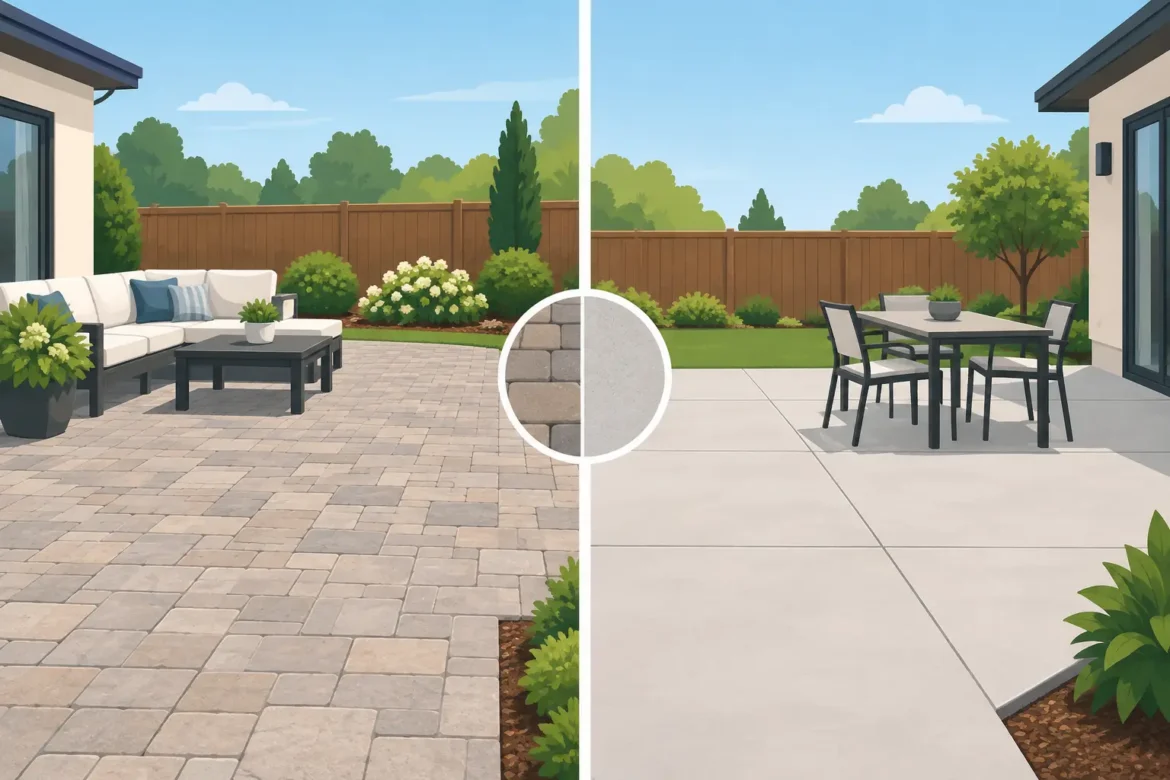
A concrete patio is a poured slab. It creates one continuous, solid surface that can be finished in several ways, including broom finish, stamped patterns, exposed aggregate, or color. It is often a practical choice for homeowners who want a simple, clean patio with a lower upfront price.
A paver patio is built from individual concrete, brick, or natural stone units installed over a properly prepared base. The pavers are locked together with edge restraint and joint sand, creating a surface with many joints rather than one large slab. That construction gives pavers more design options and makes repairs more manageable when a section needs attention.
Neither surface is automatically better. A basic concrete patio can be a smart fit for a small, straightforward backyard. Pavers are often worth the added investment when appearance, drainage, long-term repairability, or a custom layout matters.
Appearance and Design Flexibility
Pavers offer more ways to give a patio a finished, built-in look. Homeowners can choose from different shapes, colors, textures, borders, and laying patterns. A border can define the edge of a seating area, while a contrasting center pattern can make the patio feel more connected to a walkway, stoop, pool area, or retaining wall.
That flexibility is especially useful on properties where the patio needs to work around landscaping, grade changes, existing masonry, or an irregular backyard layout. Pavers can be cut and shaped around curves, steps, fire pits, and planting beds without making the entire project look patched together.
Concrete has come a long way beyond a plain gray slab. Stamped and colored concrete can imitate stone, brick, or slate at a lower cost than some premium paver installations. Still, the pattern is part of one large slab. If it cracks or requires a repair, matching the original color and finish can be difficult over time.
For a simple, modern space, concrete can look sharp. For homeowners looking for detail, texture, and a more custom hardscape appearance, pavers usually have the advantage.
Cost: Upfront Price Versus Long-Term Value
In many cases, standard poured concrete costs less upfront than a paver patio. It requires fewer individual materials and can be installed efficiently on a level, accessible site. If budget is the main concern and the design is uncomplicated, concrete may be the practical choice.
Pavers generally cost more because the installation involves more base preparation, bedding material, edge restraints, cutting, and labor. The material selection also affects the final price. Basic concrete pavers are different from premium pavers or natural stone, and a patio with curves, borders, steps, or built-in features will require more work than a rectangular layout.
The initial price is not the only number to consider. A well-built paver patio can be easier and less expensive to repair locally. With concrete, a crack may be manageable, but a slab that settles badly or develops widespread cracking can lead to more noticeable and costly work.
A reliable estimate should account for excavation, base depth, grading, drainage, access to the backyard, demolition of existing surfaces, and the condition of the soil. A low price that skips base preparation can become an expensive problem after the first few winters.
New Jersey Weather, Movement, and Cracking
New Jersey patios deal with moisture, snow, ice, hot summers, and repeated freeze-thaw cycles. Water gets into small openings, freezes, expands, and puts pressure on hard surfaces. Ground movement and poor drainage can make the situation worse.
Concrete is strong, but it can crack. Control joints are installed to encourage cracking in planned locations, yet they do not guarantee a crack-free patio. Small hairline cracks are common and may be mostly cosmetic. Larger cracks, uneven sections, or areas that hold water are signs that the base, soil, drainage, or installation may need attention.
Pavers can shift too, especially if the base is shallow, the edges are not restrained, or water is washing material out from below. The major benefit is that individual pavers can often be lifted, the base corrected, and the same pavers reinstalled. That makes pavers more forgiving when a localized repair is needed.
The key for either material is what happens underneath the finished surface. Proper excavation, a compacted aggregate base, correct pitch away from the home, and attention to runoff matter more than a sales pitch about any one surface.
Drainage Should Influence the Decision
A patio that drains poorly can create slippery spots, muddy edges, erosion, and water against the foundation. No patio material fixes a drainage problem by itself. The patio has to be designed as part of the property, with a planned slope and a clear path for water to move away.
Concrete is typically pitched so water sheds across the slab and away from the house. This can work very well when the grade allows for it. On a tight property or a yard with existing drainage trouble, the water may need a more deliberate solution such as a channel drain, catch basin, or regrading.
Pavers have joints that allow some surface water to move through, although standard paver patios are not the same as fully permeable pavement systems. Permeable pavers use specially designed joints and base layers to manage runoff more effectively. They can be a strong option where drainage is a recurring concern, but they must be designed and installed correctly for the site.
If water already ponds near your house, do not choose a patio material first and hope the problem disappears. Have the grade and water flow evaluated before construction begins.
Maintenance and Repairs
Both pavers and concrete need basic care. Keeping leaves, soil, and standing water off the surface helps prevent staining and deterioration. Patio furniture with worn metal feet can scratch or stain either option, and grill grease should be cleaned up promptly.
Concrete may need periodic cleaning and, depending on the finish and exposure, resealing. De-icing products can damage concrete surfaces, particularly during the first winter or when harsh products are used repeatedly. Avoid using rock salt whenever possible, and use a product approved for the surface.
Pavers benefit from occasional cleaning, joint sand replacement, and sealing when appropriate. Over time, the joints may lose sand, weeds may appear, or some pavers may need to be reset. These are usually manageable maintenance items, not reasons to replace the whole patio.
For repairs, pavers are often the easier choice. A damaged or sunken section can be opened, corrected, and put back together. Concrete repairs can be structurally effective, but a patch may remain visible because the original slab has weathered and changed color.
When Concrete Is the Better Fit
Concrete is a good option when the patio is modest in size, the site is relatively level, and the homeowner wants a straightforward surface at a lower initial cost. It can also work well for utility areas, simple seating pads, and spaces where the design does not need borders, curves, or extensive detail.
A quality concrete patio still needs the right thickness, reinforcement where appropriate, joints, base preparation, and drainage slope. A plain patio should not mean a rushed patio.
When Pavers Are Worth the Investment
Pavers make sense for homeowners who want a patio that feels like a permanent extension of the home. They are particularly well suited for outdoor kitchens, fire pit areas, pool decks, front entries, connected walkways, and patios with changes in shape or elevation.
They are also a strong choice when the property may require future access for drainage work, utility repairs, or adjustments. Rather than cutting and patching a slab, sections of a paver patio can often be carefully removed and reinstalled.
Bentley Paving & Masonry helps New Jersey property owners look beyond the surface finish and plan hardscape work around drainage, grade, access, and the way the space will actually be used.
Choose the Patio Built for Your Property
The best patio is not simply the one with the lowest first price or the most dramatic showroom sample. It is the one installed on a stable base, pitched correctly, matched to the home, and built for the way your family or tenants will use the space. Before selecting a color or pattern, walk the yard after a heavy rain and pay attention to where the water goes. That one detail can lead to a patio that stays attractive, usable, and dependable for years.