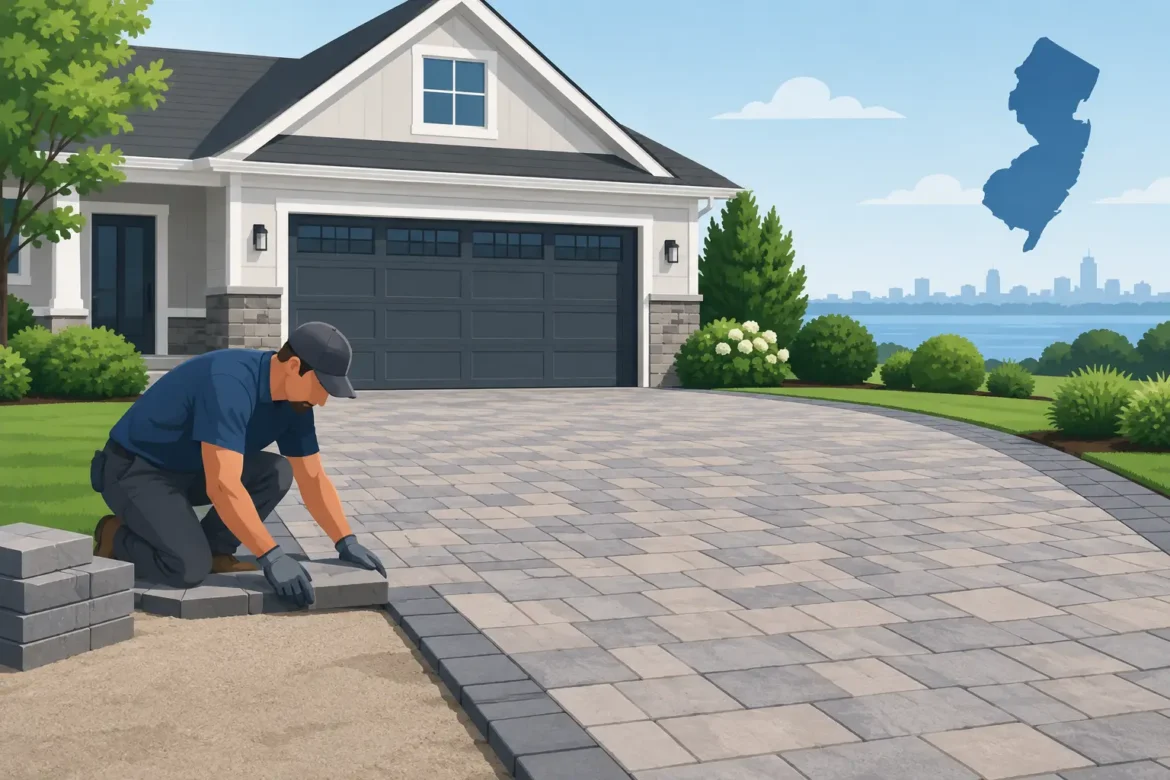
A paver driveway can make a home look finished before anyone reaches the front door. It can also fail early if the work below the pavers is rushed. For paver driveway installation New Jersey homeowners can depend on, the real value is not just in the color, pattern, or border. It is in proper excavation, a stable base, controlled drainage, and careful installation that stands up to local weather.
New Jersey driveways see a lot: summer heat, winter freeze-thaw cycles, heavy rain, road salt, SUVs, delivery trucks, and daily traffic. A well-built paver surface is designed to handle those conditions while giving the property a more distinctive appearance than a standard asphalt or concrete driveway.
What Makes a Paver Driveway Worth the Investment?
Pavers offer a combination many homeowners want: curb appeal, strength, and the ability to make repairs without tearing out an entire slab. Whether the home is traditional, modern, colonial, or stone-fronted, the right paver selection can tie the driveway into walkways, stoops, patios, retaining walls, and other masonry features.
The visual choices are broad, but a paver driveway should never be treated as decoration alone. It is a working surface. The pavers, edge restraints, base layers, and drainage plan all need to suit the size of the driveway and the vehicles using it.
Compared with a poured concrete driveway, individual pavers can be lifted and reset if a small area needs service later. Compared with asphalt, pavers offer more design flexibility and a more formal finished look. The trade-off is that paver work usually requires a larger upfront investment and more detailed site preparation. That preparation is exactly what helps the surface perform over time.
Paver Driveway Installation in New Jersey Starts Below Grade
A driveway may look level when the last paver is set, but the most critical work happened before the first paver was laid. Weak base preparation is behind many common driveway problems, including settling, shifting, puddles, and uneven sections.
Excavation and a Stable Base
The existing surface and unsuitable soil must be excavated to create room for the full driveway system. The required depth depends on soil conditions, the intended use of the driveway, and the paver system being installed. A driveway used by passenger vehicles does not have the same needs as an area expected to carry heavier commercial traffic or frequent large trucks.
After excavation, the subgrade is shaped and compacted. A properly graded aggregate base is then installed in layers and compacted thoroughly. This base spreads vehicle weight and helps reduce movement caused by changing ground conditions. Bedding sand is placed above the compacted base to create a consistent setting bed for the pavers.
Cutting corners here can look fine for a season. Then a wet winter, a heavy vehicle, or repeated freeze-thaw cycles reveal the problem. Good workmanship is often invisible once the job is complete, but it is what keeps the finished driveway looking right.
Drainage Is Part of the Driveway, Not an Add-On
Water should not sit on a driveway, run toward a garage, or collect against the foundation. New Jersey properties can have challenging grades, compact soil, and heavy rain events, so drainage needs to be considered before the layout is finalized.
The driveway should be pitched to move water in a controlled direction. Depending on the property, that may mean adjusting grades, adding drainage solutions, or coordinating the driveway with nearby walkways, patios, retaining walls, and landscaping. The right approach depends on where the water starts, where it naturally wants to go, and what needs protection.
A beautiful paver driveway with poor drainage is not a complete job. Addressing water flow during construction is usually more practical than trying to correct it after surfaces and landscaping are already in place.
Choosing Pavers That Fit the Property
The best paver is not always the most expensive option or the boldest color in a sample book. It should complement the home and hold up to the intended use. Concrete pavers are a popular driveway choice because they are manufactured for consistent size and strength and come in a wide range of colors, textures, and shapes.
A classic rectangular paver laid in a herringbone pattern is often a strong choice for driveways. The interlocking pattern helps distribute traffic loads and gives the surface a clean, established look. Larger-format pavers or more decorative patterns can work as well, but the layout must be designed with driveway performance in mind.
Color deserves practical consideration. Light pavers can brighten a property but may show tire marks and staining more readily. Very dark pavers can look sharp, though dust, salt residue, and fading may be more noticeable in certain settings. Blended earth tones tend to work well with many New Jersey homes because they hide everyday dirt while still adding warmth and dimension.
Borders are another useful design tool. A contrasting soldier course or darker perimeter can define the driveway edge, connect the driveway to a walkway, and give the installation a more custom appearance. It also provides a clear transition where the driveway meets lawn, planting beds, or other hardscape areas.
Details That Keep a Driveway in Place
Pavers rely on more than their own weight. Strong edge restraints are needed to hold the system together and prevent the outer rows from spreading under vehicle traffic. This is especially important along curved driveways, turning areas, and transitions near the street or garage.
Once the pavers are installed, joint sand is swept into the spaces between them and compacted. This helps create interlock across the surface. Depending on the project, polymeric joint sand may be used to better resist washout and weed growth. It is not a substitute for a proper base or drainage plan, but it is one more detail that helps protect the finished work.
Clean cuts also matter. Driveways often require pavers to be cut around curves, steps, garage aprons, utility features, or existing masonry. Sloppy cuts stand out immediately and can make an otherwise attractive installation look unfinished. Careful layout and fitting are part of the craftsmanship homeowners should expect.
Planning the Driveway Around Daily Use
A driveway should work as hard as the household does. Before construction begins, think beyond the basic vehicle path. Consider whether there is enough room to open doors comfortably, turn around safely, park visitors, access the garage, or move trash bins without crossing soft landscaping.
For homes with a narrow entrance or steep grade, the layout may need special attention at the street connection. For properties with multiple vehicles, a widened section or turning area can reduce wear on lawn edges and make daily parking less frustrating. If the driveway connects to a front walk, patio, or entrance stoop, matching or coordinating materials can make the whole exterior feel planned instead of pieced together.
Commercial property owners should also consider delivery traffic, parking flow, accessible routes, drainage around entrances, and the need to limit disruptions during construction. Pavers can be a strong option for certain entry areas, courtyards, and high-visibility sections, but asphalt or concrete may be more practical for large parking areas. The right material depends on traffic, budget, appearance goals, and maintenance expectations.
What Homeowners Should Ask Before Hiring a Contractor
A clear estimate should explain the scope of work, including removal or excavation, base preparation, drainage considerations, paver type, edging, installation, and cleanup. Price matters, but an unusually low quote can leave out the work that gives a paver driveway its strength.
Ask how deep the excavation will be, how the base will be installed and compacted, where water will drain, and how the edges will be restrained. It is also reasonable to ask who will be managing the project and whether the contractor has experience working with the site conditions common in your area.
Bentley Paving & Masonry approaches paver work with the understanding that the finished surface has to look good and perform in real New Jersey conditions. That means paying attention to the ground, the grade, the water, and the everyday use of the property instead of treating installation as a quick cosmetic upgrade.
Caring for a Paver Driveway After Installation
Pavers are durable, but they still benefit from routine care. Sweep away leaves and debris, especially near drainage areas. Clean spills such as oil or automotive fluids as soon as practical to reduce staining. During winter, use de-icing products carefully and avoid aggressive metal shovels that can chip or scratch the surface.
Over time, joint sand may need to be replenished, particularly in areas exposed to frequent water flow or heavy use. If a paver becomes stained, cracked, or damaged, it can often be replaced individually. If a small section settles because of an underlying issue, professional lifting and resetting can restore the area without replacing the whole driveway.
A properly planned paver driveway is more than a curb appeal project. It is a durable entrance to the property, built to handle traffic, weather, and the everyday demands of New Jersey life. Start with a clear plan for the base and drainage, choose materials that fit the home, and expect the same care below the surface as you see in the finished pattern.