A wet strip along the foundation, a driveway that stays puddled long after a storm, or a lawn that turns soft underfoot is more than an eyesore. Water that has nowhere to go can weaken pavement, wash out soil, stress retaining walls, and work its way toward the basement. Proper French drain installation gives that water a controlled path away from the areas you need to protect.
For New Jersey properties, drainage problems often show up after a few heavy rains, but the cause may have been building for years. Settled ground, compacted soil, roof runoff, and aging hardscape can all direct water toward the wrong place. The right solution is not always a drain in the same spot where the puddle appears. It starts with understanding where the water begins, how it travels, and where it can safely discharge.
What a French Drain Does
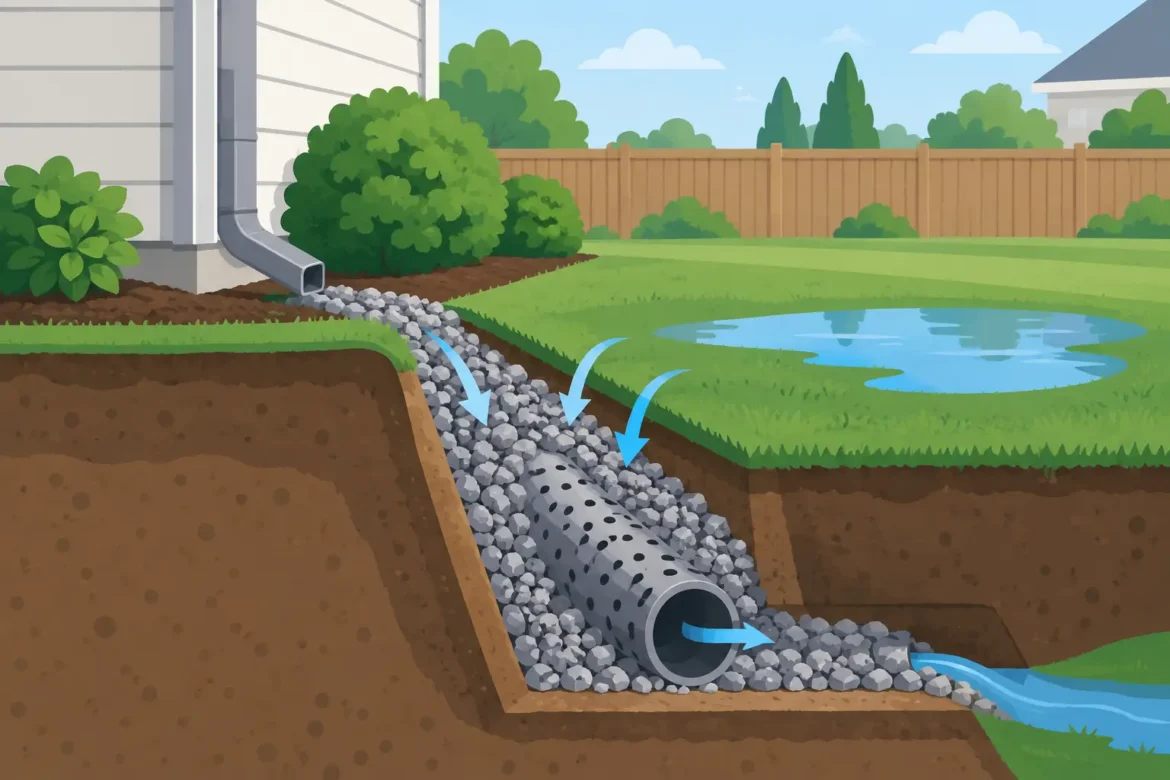
A French drain is a trench drainage system designed to collect groundwater and move it away from a problem area. It typically includes a perforated pipe set in clean stone, wrapped with filter fabric, and installed at a carefully planned slope. Water enters through the stone and pipe openings, then flows to a suitable outlet away from the home, driveway, patio, or low area.
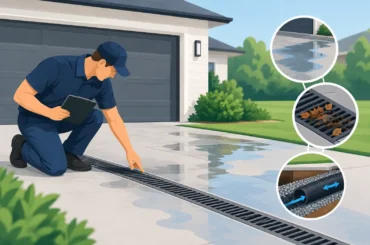
It is different from a surface drain. A surface drain catches water from above, such as runoff flowing across a patio or down a driveway. A French drain works below grade, intercepting water moving through saturated soil. On some properties, the best drainage plan uses both systems together.
That distinction matters. Installing a French drain where the issue is mainly roof runoff or poor surface grading may not solve the problem by itself. Likewise, simply regrading a lawn may not be enough when groundwater continually collects against a foundation. A site evaluation should identify the actual source before work begins.
Signs Your Property May Need Drainage Work
Standing water is the obvious sign, but many drainage issues cause damage before a large puddle forms. Homeowners and property managers should pay attention to changes that repeat after rain or snowmelt.
Common warning signs include:
- Water collecting near the foundation or basement entry
- Persistent wet or muddy areas in the lawn
- Erosion along a driveway, walkway, patio, or retaining wall
- Asphalt edges that crumble or settle near low spots
- Water stains, dampness, or musty odors in a basement
- Pavers that shift as the base beneath them washes out
- Ice forming repeatedly in the same walking or driving area
A single storm can overwhelm almost any property. The concern is a pattern. If water regularly remains in one area long after nearby ground has dried, the site likely needs better drainage, grading, or both.
French Drain Installation Starts With the Water Path
The most important part of French drain installation is planning, not digging. Before a trench is cut, the contractor needs to inspect the slope of the property, downspout locations, paved surfaces, landscaping, and the low points where water gathers. Utility locations must also be marked before excavation begins.
The goal is to create a continuous route that follows gravity. A drain pipe cannot move water uphill without mechanical assistance, so the outlet location is a major part of the design. Depending on the property, water may discharge to a lower section of the yard, a drainage swale, a dry well, or another approved drainage point. Local conditions and municipal requirements can affect what is appropriate.
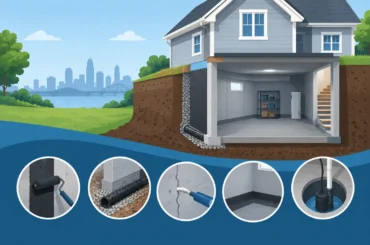
For homes with basement moisture concerns, the drain may be placed along the outside foundation where it can relieve hydrostatic pressure in the surrounding soil. For a wet lawn or driveway edge, the trench may intercept water before it reaches the paved surface or low spot. The placement depends on the cause of the issue, not on a one-size-fits-all layout.
The Trench Must Have Proper Pitch
Once the route is established, the trench is excavated to the needed depth and slope. Even a well-built drain can fail if the pipe sits flat, holds sediment, or has low spots that trap water. Consistent pitch allows collected water to keep moving toward the outlet.
Depth matters too. A shallow drain may handle surface saturation near a lawn or walkway. Foundation drainage generally requires a deeper installation and more careful coordination with the structure, existing utilities, and finished grades. This is not a place to guess with a shovel and a roll of pipe.
Stone, Fabric, and Pipe Work as One System
A reliable system uses more than perforated pipe. Filter fabric helps keep surrounding soil from migrating into the stone. Clean drainage stone creates open space for water to enter and travel toward the pipe. The pipe then carries that water away.
Skipping quality stone or fabric may save money at the start, but it can shorten the life of the installation. Fine soil can clog the stone bed, fill pipe openings, and reduce drainage performance. The trench is then covered and restored, which means a poor installation may not become visible until the same wet-ground problem returns.
After the pipe and stone are installed, the system is backfilled and the surface is restored to suit the area. In a lawn, that may mean topsoil and seed. Along a driveway or patio, restoration may involve rebuilding the edge, compacting base material, or resetting pavers where needed.
Drainage and Hardscape Problems Often Go Together
Water does not respect project categories. A drainage issue can damage asphalt, undermine paver walkways, settle concrete, and stain masonry. At the same time, a paving or hardscape project can change the way water moves across a property.
For example, a new driveway should be pitched so runoff moves away from the garage and foundation. A patio should direct water away from the home while avoiding runoff onto neighboring property. Retaining walls need drainage behind them so water pressure does not build in the soil. These details are what separate a surface that looks good on day one from one that continues to perform through New Jersey seasons.
Bentley Paving & Masonry looks at drainage as part of the full exterior site, especially when water is affecting pavement, masonry, patios, walkways, or foundation areas. Addressing the water path while repairing the damaged surface helps avoid repeating the same failure a few years later.
When a French Drain Is Not the Best Answer
A French drain is highly effective for subsurface water, but it is not the right fix for every wet area. If a downspout empties beside the house, extending or redirecting that runoff may be the first step. If the whole yard slopes toward the foundation, grading may be the primary solution. A clogged gutter, broken underground drain line, or leaking exterior spigot also needs its own repair.
Some sites need a combination approach: regrading to direct surface water, catch basins for paved runoff, downspout extensions, and a French drain to manage groundwater. In other cases, an interior basement drainage system may be considered when exterior excavation is not practical. Honest recommendations should reflect the property, the budget, and the source of the water.
What Affects the Cost and Scope
French drain projects vary because no two properties drain the same way. The length and depth of the trench, access for equipment, soil conditions, outlet location, landscaping restoration, and whether pavement or masonry must be removed all affect the scope.
A drain installed across an open lawn is usually more straightforward than one routed beside a foundation, beneath a paver walkway, or through a tight side yard. Deep excavation and difficult access take more time. So does restoring a finished surface correctly after the system is in place.
The lowest price is not always the best value if it leaves out the outlet plan, filter fabric, proper stone, restoration work, or the grading needed to make the whole system function. Ask what materials will be used, how the water will exit, and what the finished area will look like when the job is complete.
Protect the Work After Installation
French drains need far less attention than many property systems, but they are not completely maintenance-free. Keep discharge points clear of leaves, mulch, and soil. Avoid piling heavy material over the drain route if it could crush a shallow pipe or change the finished grade. If the system includes a catch basin or cleanout, check it periodically and clear visible debris.
Most importantly, watch the property during the next heavy rain. You should see water leaving the problem area rather than pooling against the house or pavement. A good drainage system is not flashy, but its results are easy to recognize: firmer ground, cleaner walkways, safer access, and less water where it does not belong.
Water problems rarely improve by waiting for the next season. When a wet lawn, failing driveway edge, or damp foundation keeps coming back, a clear drainage plan can protect the improvements you have already invested in and make the property easier to use every day.