A driveway can look solid and still be working against your property. Water that pools at the garage, runs across the pavement, or cuts channels along the edges can turn a small grading issue into cracked asphalt, sinking pavers, wet basements, and unsafe winter ice. A qualified driveway drainage contractor looks beyond the puddle to find where the water starts, where it is supposed to go, and what needs to change for a lasting fix.
For New Jersey homeowners and property managers, drainage problems often show up after a hard storm, spring thaw, or heavy leaf buildup. The visible water is frustrating, but the damage underneath is usually the bigger concern. Proper drainage protects the driveway surface, the base below it, nearby masonry, landscaping, and the foundation of the building.
Signs Your Driveway Has a Drainage Problem
One puddle that dries quickly may not call for a major project. A low spot, however, should not hold water for days. Standing water softens the base beneath asphalt and can work into cracks during freeze-thaw cycles. Over time, that movement leads to alligator cracking, potholes, edge failure, and sections that sink.
Pay attention to water collecting at the bottom of a sloped driveway or directly in front of the garage. Water should never be directed toward the house. If it reaches the foundation, basement entry, or garage wall, the problem is no longer only about pavement appearance.
Runoff is another warning sign. If heavy rain carries mulch, gravel, or soil across the driveway, the grade may be moving water too quickly or toward the wrong area. Washed-out edges and exposed driveway base are common when runoff has no controlled path. On commercial properties, these conditions can also create trip hazards, ice hazards, and liability concerns around parking areas and walkways.
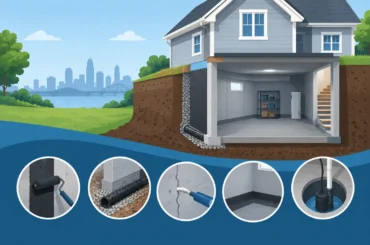
A musty basement, damp wall, or recurring water near a lower-level door can be connected to driveway drainage. It depends on the layout of the property, but surface water management and foundation protection often need to be considered together.
What a Driveway Drainage Contractor Should Evaluate
Drainage is not a one-size-fits-all trench or drain installation. A reliable contractor starts by looking at the complete site: the driveway slope, roof runoff, nearby grades, downspout locations, garage elevation, landscaping, sidewalks, and available discharge areas.
The goal is simple: move water away from structures and paved surfaces without creating a new problem for another part of the property. That may mean changing the driveway pitch, adding a collection drain, installing underground piping, or rebuilding a failed section of pavement with a properly compacted base.
The Existing Driveway Grade
A driveway needs enough pitch to shed water, but not so much that vehicles scrape or runoff becomes difficult to control. Even a surface that looks flat can have a low point that traps water. During an inspection, the contractor should identify where water naturally travels and whether the current grade sends it away from the home, garage, and pedestrian areas.
Sometimes the fix is limited to correcting one settled section. Other times, the driveway was installed with the wrong slope from the start, and a larger reconstruction is the more honest recommendation. Patching over a low spot without addressing the base or pitch may improve the appearance for a short time, but it will not solve the cause.
Water Sources Beyond the Driveway
The driveway may be receiving more water than it can handle. Downspouts that discharge near pavement, a neighboring slope, clogged gutters, or a patio that drains toward the drive can all add to the problem.
A good drainage plan accounts for these sources. Extending downspouts into a proper drainage system can keep roof water from flooding the driveway edge. In other cases, a swale or regraded landscape area may safely guide water around the paved surface. The right option depends on lot size, soil conditions, elevation, and local site restrictions.
The Condition of the Base and Edges
Asphalt and pavers rely on stable support below the surface. When water enters the base, it can weaken and shift the material. That is why recurring cracks in the same area often point to a drainage issue rather than a simple surface defect.
Driveway edges deserve close attention as well. They are more exposed to erosion and vehicle weight. If the edge is breaking away, a contractor may need to restore the base, build proper support, and direct runoff away before installing new asphalt, concrete, or pavers.
Common Driveway Drainage Solutions
The best solution should fit the property, not the contractor’s preferred product. Several approaches may work well alone or in combination.
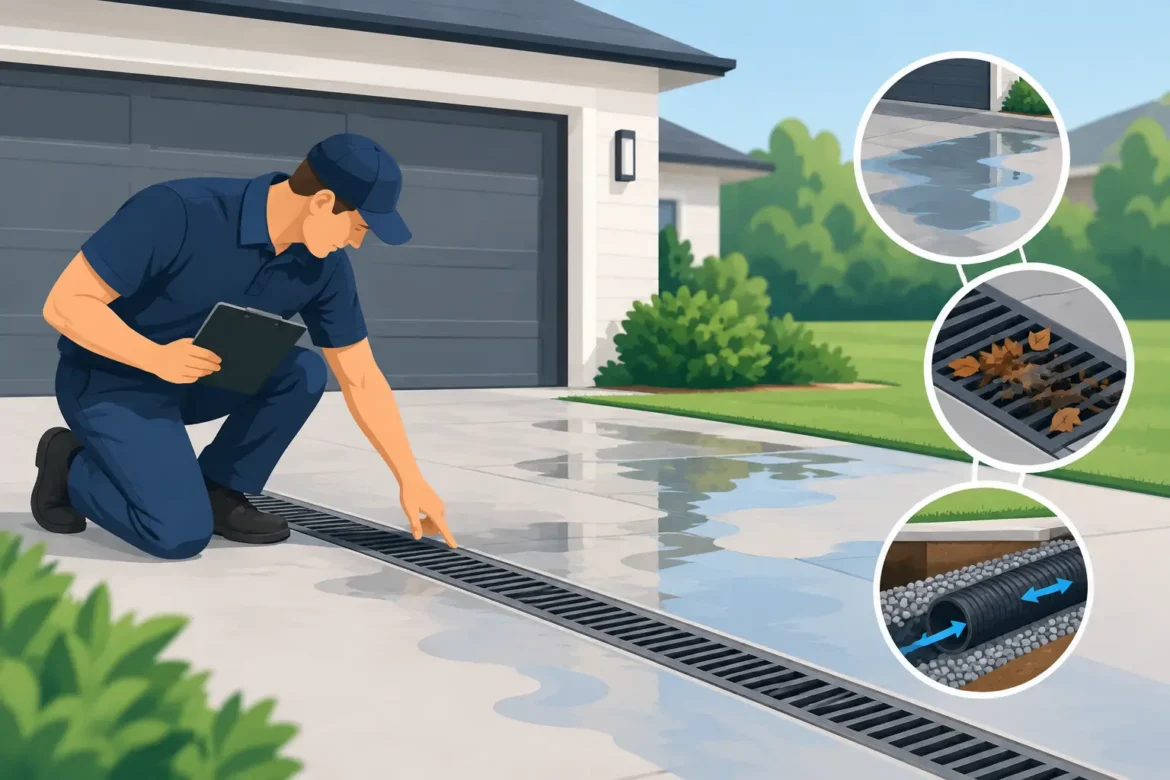
A channel drain is often used where water collects across a driveway, such as at a garage entrance or the bottom of a slope. The drain captures runoff before it enters the garage and directs it through a pipe to an approved discharge location. It must be installed at the correct elevation and kept clear of leaves and debris.
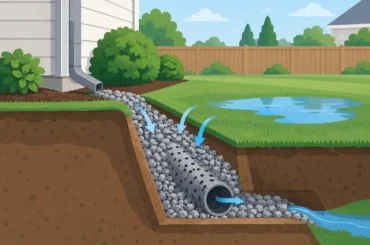
French drains can help manage groundwater or water moving through soil alongside a driveway. These systems use perforated pipe and stone to collect water below the surface. They are useful in the right setting, but they are not a substitute for correcting a driveway that is pitched toward the house.
Regrading is sometimes the most effective answer. Adjusting the driveway, surrounding soil, or both can create a natural path for runoff. This may be paired with new asphalt, pavers, concrete, curbing, or a retaining feature where the grade needs support.
Catch basins and solid drainage piping are often used for larger runoff volumes, particularly on commercial sites and properties with wide paved areas. These systems need a clear destination for the water. Sending water toward a neighbor’s property or letting it discharge beside the foundation only moves the issue.
Why Drainage Should Come Before New Pavement
Installing a beautiful new driveway over a wet, unstable base is money poorly spent. Fresh asphalt may look smooth on installation day, but water below the surface can shorten its life quickly. The same is true for pavers that settle unevenly because the bedding and base materials are repeatedly saturated.
When a driveway is already due for replacement, that is often the best time to address drainage. The surface is removed, the base is accessible, and the contractor can correct underlying problems instead of working around them. It may add cost to the project upfront, yet it can prevent repeated repairs and protect the investment in the new surface.
For a driveway that is otherwise in good shape, a targeted drainage repair may be enough. There is no benefit in recommending full replacement when a properly installed drain, pipe extension, or localized regrading will solve the water issue. The condition of the pavement and the source of the water should guide the scope.
Questions to Ask Before Hiring a Contractor
You do not need to be a drainage expert, but you should expect clear answers. Ask where the water is coming from, where it will go after the work is complete, and how the proposed solution protects the driveway and foundation. A contractor should be able to explain the plan in plain language, not just point to a drain and promise it will work.
It is also reasonable to ask whether the driveway base needs repair, whether permits or local drainage requirements may apply, and what maintenance the system will need. Most surface drains need periodic cleaning. Catch basins need debris removed. Gutters and downspouts should stay clear so they do not overwhelm the system during storms.
Be cautious of quick fixes that ignore the grade. Filling cracks, adding a thin layer of asphalt, or spreading gravel over a washed-out edge may temporarily hide the problem. If water continues to run in the same direction, the damage will return.
Protect the Parts of Your Property Water Can Reach
Driveway drainage affects more than the drive itself. It can help preserve garage slabs, sidewalks, retaining walls, front stoops, planted areas, and basement walls. A well-planned project balances function and appearance so the finished work looks like part of the property rather than an afterthought.
Bentley Paving & Masonry approaches drainage with the same practical focus used for paving, masonry, and exterior repairs: identify the real cause, use quality materials, and complete the work with care. If water is pooling, washing out driveway edges, or heading toward your home or building, it is worth addressing before the next hard rain turns a manageable repair into a larger project.