A few cracks near the edge of a driveway are not always a reason to start over. But when water is pooling, the surface is breaking apart, and patches keep coming back, the question changes from “Can this be repaired?” to “How much longer will repairs hold?” Knowing when to replace asphalt helps New Jersey property owners avoid putting good money into a pavement surface that has reached the end of its useful life.
Asphalt does not fail all at once. Sun, rain, freeze-thaw cycles, vehicle weight, poor drainage, and normal aging gradually wear down the surface and the base beneath it. The right solution depends on what is happening below the blacktop, not just how bad it looks from the curb.
1. Cracks Have Spread Across the Surface
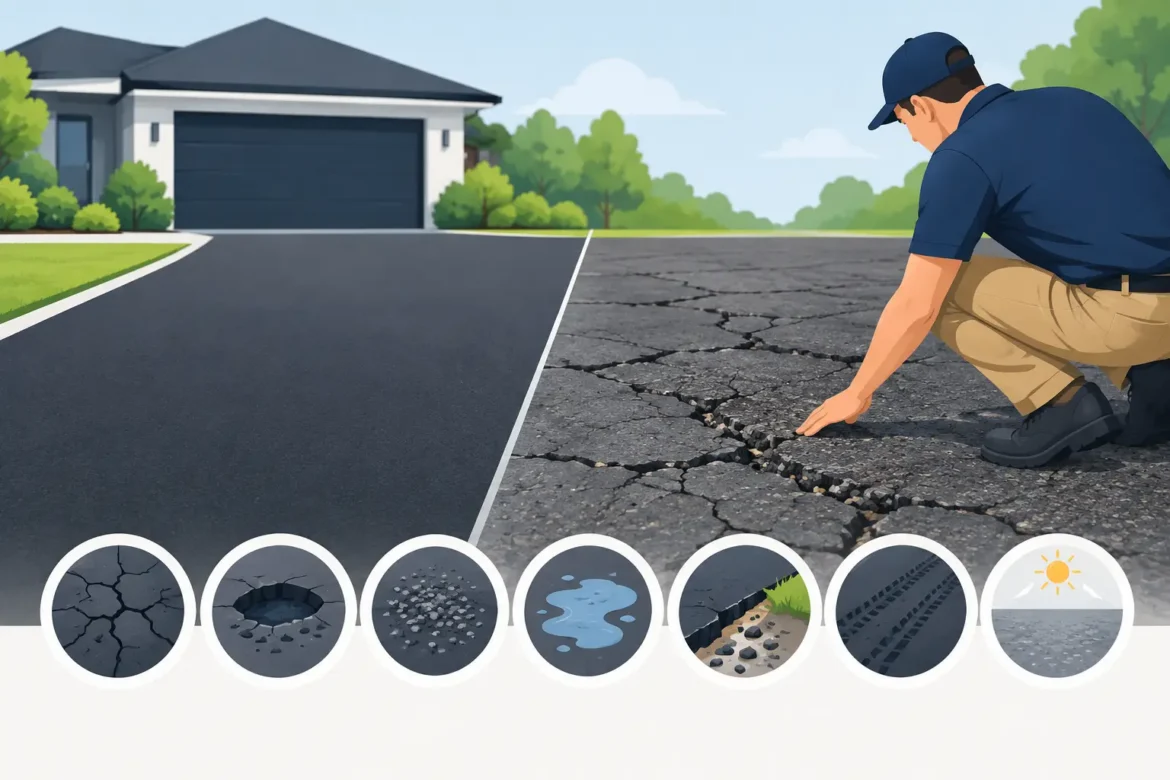
A single narrow crack can often be cleaned, sealed, and monitored. Cracks become more serious when they multiply, widen, connect, or form a pattern that resembles alligator skin. This is commonly called alligator cracking, and it usually means the pavement and the base under it are no longer strong enough to support traffic.
At that point, crack filling may keep water out for a short time, but it will not rebuild the failed structure underneath. If the cracking covers a large section of a driveway or parking lot, asphalt replacement is usually the more dependable long-term choice.
2. Potholes and Depressions Keep Returning
Potholes are more than an appearance issue. They allow water to reach the base, where it can weaken the ground that supports the asphalt. A properly completed patch can handle a small, isolated problem. Repeated potholes in the same area, however, often point to base failure, drainage trouble, or both.
Depressions deserve the same attention. If a driveway has low spots that hold water after rain, the pavement may be settling underneath. Water should move away from the house, garage, walkway, and paved surface. When it does not, a new surface installed without correcting the slope or drainage can develop the same trouble again.
3. The Asphalt Is Crumbling at the Edges
Driveway edges carry less support than the center, especially when cars regularly pull off the paved area. Over time, unsupported edges crack, break away, and leave the driveway looking narrow and ragged. This is common where the base was not extended far enough, soil is soft, or water has been working underneath the edge.
Minor edge damage can sometimes be repaired. When crumbling runs along long sections of the driveway, replacement may allow the contractor to rebuild and properly support the perimeter. That creates a cleaner finished line and gives the new pavement a better chance of lasting.
4. The Surface Is Faded, Dry, and Losing Aggregate
Asphalt starts with a deep black finish, then naturally turns gray as it ages and oxidizes. Fading alone does not mean replacement is needed. Sealcoating can help protect an intact, aging surface from water, sunlight, oil drips, and everyday wear.
The concern is when the surface becomes dry and brittle, with loose stones showing or coming free. This is called raveling. Once asphalt is losing aggregate across broad areas, it has less protection from moisture and traffic. Sealcoating cannot restore pavement that is already breaking down. In that situation, replacement or resurfacing may make more sense than another maintenance coat.
5. Repairs Cover Too Much of the Driveway or Lot
Patching is valuable when damage is limited. It becomes a poor investment when patches cover large portions of the pavement, the patches are sinking, or new failures keep appearing around older repairs. A heavily patched driveway can look uneven and may create trip hazards, drainage issues, and rough access for vehicles.
There is no single percentage that applies to every property, but widespread repair needs are a practical sign to compare the cost of ongoing patchwork with replacement. A professional assessment should look at the condition of the surface, the strength of the base, how the area drains, and the traffic it carries. A residential driveway used by two cars has different needs from a commercial lot receiving delivery vehicles every day.
6. Water Is Standing on the Pavement
Standing water is one of asphalt’s biggest enemies. It seeps into cracks, softens the base, and expands during freezing weather. In New Jersey, that freeze-thaw movement can turn a small surface issue into a deeper failure over a few seasons.
If puddles disappear quickly and the pavement is otherwise sound, a localized repair may be enough. Persistent ponding is different. It may mean the asphalt has settled, the existing slope is wrong, runoff is coming from another part of the property, or drainage has failed. Replacement should address the water source, not simply place fresh blacktop over a wet, unstable area.
This is where paving and drainage work often need to be planned together. Catch basins, grading, drainage channels, or other site improvements may be needed to protect the new pavement and direct water away from buildings.
7. The Asphalt Is Near the End of Its Service Life
A well-installed asphalt driveway can often last 15 to 25 years with good drainage, reasonable traffic, timely repairs, and regular protection. Parking lots may have a different timeline based on traffic volume, plowing, heavy vehicles, and maintenance. These are general ranges, not promises. A well-cared-for older driveway may still have useful life, while a poorly drained surface can fail much sooner.
Age matters because asphalt loses flexibility over time. Once the binder becomes brittle and the base has weakened, repairs become less effective. If your driveway or lot is approaching its expected lifespan and showing several of the warning signs above, replacement is usually worth considering before the damage spreads further.
When to Replace Asphalt Instead of Resurfacing
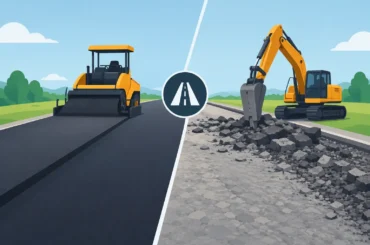
Resurfacing, also called an overlay, involves placing a new layer of asphalt over an existing pavement surface. It can be a cost-effective option when the base is solid and the old pavement has mainly surface-level wear. It provides a clean, uniform appearance without the full cost of removing and rebuilding everything.
However, resurfacing is not a cure for structural failure. If the original asphalt is badly cracked, unstable, sunken, or holding water because the base has failed, those issues can transfer through a new overlay. Full replacement involves removing the damaged asphalt, evaluating the base, correcting weak areas and drainage concerns, and installing new pavement over a properly prepared foundation.
The honest answer is that it depends on the condition beneath the surface. A contractor should explain why a repair, overlay, or full replacement is being recommended rather than pushing the biggest job by default.
What a Proper Asphalt Replacement Should Address
Replacing asphalt is more than laying a fresh black surface. The preparation work has a major effect on durability. Existing pavement should be removed as needed, the base should be evaluated and compacted, and the finished surface should be graded for proper drainage. Driveway thickness and base preparation should fit the intended use of the area.
For homeowners, that means considering parked vehicles, garage access, delivery trucks, and the way water moves around the property. For commercial owners and property managers, it means looking at traffic patterns, loading areas, accessible routes, curbing, drainage structures, and areas where heavy vehicles turn or stop.
Bentley Paving & Masonry approaches paving work with the understanding that a driveway or parking lot is a working surface, not just a curb-appeal feature. The finished asphalt should look clean, drain properly, and stand up to the way the property is actually used.
Do Not Wait for Complete Failure
Many owners wait until pavement becomes difficult to drive on before calling for an estimate. By then, water damage and base failure may have expanded the scope of work. Getting an evaluation when cracks, settling, or drainage problems first become noticeable gives you more options and more time to plan.
A good paved surface should feel solid underfoot and under tires, direct water where it belongs, and make the property look cared for. If yours is showing repeated signs of failure, a straightforward inspection can help you decide whether a targeted repair will still do the job or whether replacement is the better investment.