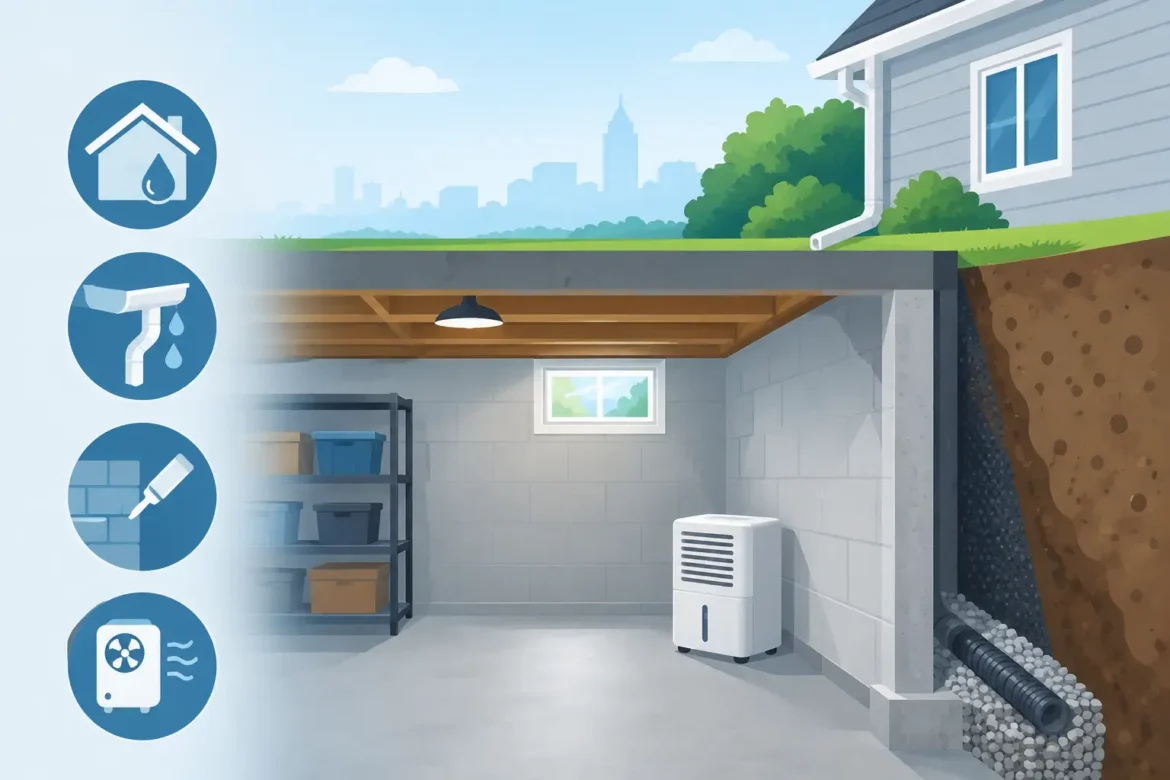
A damp basement rarely starts as a basement problem. In many New Jersey homes, the water begins outside at a clogged gutter, a low spot beside the foundation, a cracked driveway edge, or soil that slopes toward the house. This basement moisture prevention guide explains what to look for, what you can handle through regular upkeep, and when a drainage or waterproofing repair is the practical next step.
Moisture does not always arrive as standing water after a hard storm. It may show up as a musty odor, damp air, peeling paint, white powder on masonry, warped stored items, or dark staining along the bottom of a wall. Catching these signs early can help protect the foundation, finished areas, and belongings below grade.
Start Where Water Meets the House
The first rule of basement moisture prevention is simple: keep roof runoff and surface water moving away from the foundation. A basement wall is built to hold back soil. It should not be expected to handle large amounts of water sitting against it after every rainfall.
Walk around the property during or shortly after a storm. Look for overflowing gutters, downspouts that empty beside the foundation, puddles near exterior walls, and areas where mulch or soil has built up too high against the siding. These are common trouble spots, especially on older properties where grading has settled over time.
Gutters should be clear enough to carry roof water freely. Downspouts should discharge well away from the home, not into a short extension that ends at the planting bed. If runoff has nowhere suitable to go, simply adding a longer extension may not solve the issue. A properly planned drainage route may be needed to move water to a safe discharge area without creating a new wet spot in the yard or near a neighbor’s property.
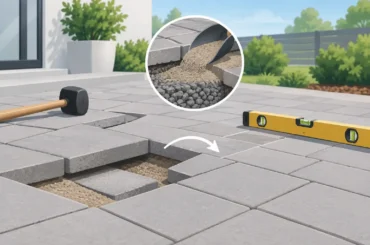
Hard surfaces deserve attention as well. A driveway, patio, walkway, or stoop that pitches toward the house can direct a surprising amount of water to the foundation. Water may also enter through cracks or joints where pavement meets the home. Repairing the surface and correcting the pitch can be more effective than repeatedly treating the basement wall from the inside.
Check the Grade Around the Foundation
The soil around your home should slope down and away from the foundation. Even a modest slope helps rainwater shed away instead of soaking into the backfill beside basement walls. Ideally, the grade continues away from the home for several feet without turning into a bowl or low area.
This is not always a quick shovel-and-soil fix. Adding soil against the house without considering siding clearance, window wells, patios, or drainage paths can create other problems. The goal is to manage water, not just cover it up.
Watch for these conditions around the perimeter:
- Soil, mulch, or landscaping piled high against siding or masonry
- A settled area that holds water beside the foundation
- Window wells filled with leaves, soil, or standing water
- Patio, walkway, or driveway edges sloping back toward the home
- Downspouts discharging into the same area that already stays wet
If the yard naturally directs water toward the house, regrading, a swale, a catch basin, or underground drainage may be appropriate. The best choice depends on the lot, soil conditions, available discharge points, and how much water the area receives. A small low spot may need a simple correction. Persistent runoff from a driveway, hillside, or large roof area usually requires a more complete plan.
Protect Foundation Openings and Exterior Details
Water often finds its way in through small, overlooked openings. Inspect basement windows, window wells, exterior hose connections, utility penetrations, and the joint where the foundation meets a stoop or patio. Caulk and sealant can help around minor gaps, but they are maintenance items, not permanent answers for moving soil or active drainage problems.
Window wells need special attention. They should be kept clear of leaves and debris, fitted with properly maintained covers where appropriate, and graded so water does not collect inside. A window well that fills during rain puts direct pressure on the basement window and can quickly lead to a leak.
Cracked masonry and deteriorated mortar should also be repaired before winter weather makes them worse. Freeze-thaw cycles can enlarge small cracks and allow more moisture into the wall. Masonry repairs are especially worthwhile around steps, retaining walls, chimneys, and exterior foundation areas where failing joints can direct water where it does not belong.
Manage Humidity Inside the Basement
Not every damp basement is caused by a leak. In summer, warm humid air can enter a cool basement and condense on cold pipes, floors, and walls. This can make the space feel clammy even when no rainwater is coming through the foundation.
A dehumidifier can be a useful part of the solution, particularly in a basement used for storage, laundry, or finished living space. Keep it sized for the area, clean the filter, and make sure it drains properly. Insulating cold water pipes can reduce condensation, while covering exposed earth in a crawlspace can limit moisture rising from the ground.
Still, a dehumidifier should not be asked to solve an exterior water issue. If you notice water after rain, staining that grows over time, or dampness concentrated on one wall, start outside. Drying the air may improve comfort, but it will not relieve water pressure against the foundation.
Know the Warning Signs That Need More Than Maintenance
Some moisture issues call for professional evaluation because the source is below ground, the drainage path is failing, or the foundation wall is taking repeated water pressure. Waiting can lead to mold growth, damaged framing, ruined flooring, and a more expensive repair later.
Pay attention if water enters at the same location after storms, a sump pump runs constantly or fails to keep up, basement walls show horizontal cracking, or white mineral deposits keep returning after cleaning. Rusting metal supports, loose floor tiles, damp carpet edges, and a persistent musty odor in a finished basement are also signs worth taking seriously.
A professional assessment should look beyond the visible wet area. Water can travel along footing drains, through soil, under slabs, and behind finished walls before it appears indoors. The correct repair may involve exterior grading and drainage, foundation waterproofing, crack repair, an interior drainage system, or a combination of methods. There is no one-size-fits-all product that works for every basement.
Plan Improvements as One Exterior System
Drainage works best when it is considered alongside the rest of the property. A new patio needs the right pitch. A driveway should not send runoff toward the garage or foundation. Retaining walls need drainage behind them. Landscaping should leave room for water to move away from the home.
This is where experienced exterior work makes a real difference. Bentley Paving & Masonry helps New Jersey property owners address the connected issues of grading, drainage, masonry, hardscapes, and waterproofing so one improvement does not create a problem somewhere else. The objective is straightforward: direct water where it should go and protect the surfaces and structures you have invested in.
Seasonal maintenance helps keep that system working. Clean gutters in spring and fall, check downspout outlets after heavy storms, clear window wells, and inspect paved surfaces for cracks or settling. If you have a sump pump, test it before the wet season and consider a battery backup where outages are a concern.
A dry basement starts with water control above ground. Give rain a clear path away from the house, correct surfaces that send it back, and do not ignore the early signs of dampness. Addressing a small drainage issue now can protect your home long before it becomes a major waterproofing project.