A driveway has to handle more than parked cars in New Jersey. It deals with freeze-thaw cycles, summer heat, heavy rain, road salt, delivery trucks, and the daily traffic of a busy home. When comparing asphalt vs concrete driveways, the better choice is not always the one with the lowest first price or the cleanest look on installation day. It is the surface that fits your property, budget, drainage conditions, and plans for the years ahead.
Both materials can provide a durable, attractive entrance when installed over a properly prepared base. The difference comes down to how they respond to weather, how they are maintained, how easily they can be repaired, and what kind of appearance you want for the property.
Asphalt vs Concrete Driveways: The Main Difference
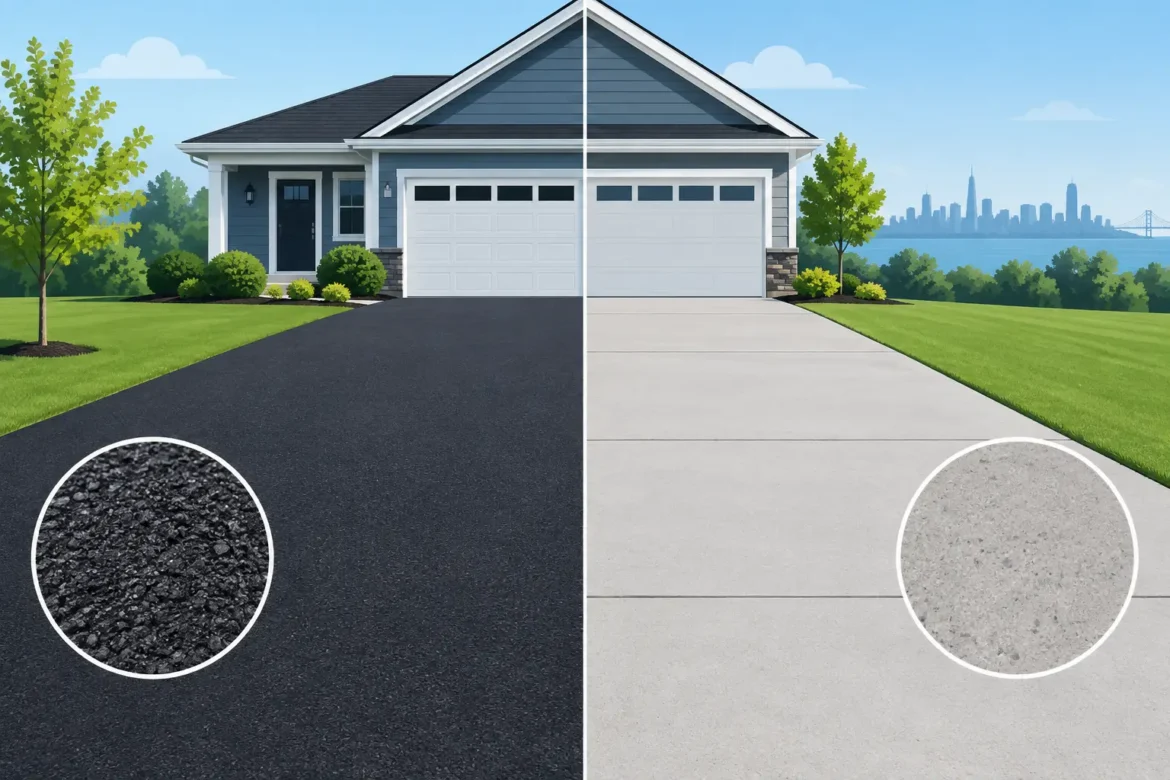
Asphalt is a flexible paving material made with aggregate and asphalt binder. It has a dark, clean appearance, can usually be installed quickly, and works well in areas with seasonal ground movement. Concrete is a rigid slab material. It offers a lighter color and a more formal finished look, but it relies heavily on proper base preparation, joints, and water control to avoid cracking and settlement.
For many New Jersey homeowners, asphalt is the practical choice because it is generally less expensive to install, easier to repair, and more forgiving during freezing and thawing. Concrete can be an excellent option for homeowners who prefer its appearance and are prepared for the higher upfront investment and different maintenance needs.
The key point is simple: neither surface performs well when water is trapped underneath it. A quality driveway starts below the finished surface with grading, a stable aggregate base, proper compaction, and a plan for directing runoff away from the driveway, garage, and foundation.
Upfront Cost and Long-Term Value
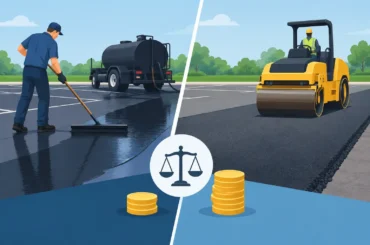
Asphalt typically costs less upfront than concrete. That can make a meaningful difference when replacing a long driveway, widening the parking area, or paving a shared commercial entrance. Asphalt installation is also often faster, which can reduce disruption around a home or business.
Concrete usually requires a larger initial investment because of the material, forming, reinforcement where appropriate, finishing work, and curing time. Decorative finishes, colors, and stamped patterns can raise the price further. For some properties, that added appearance is worth it. A concrete driveway can pair well with brick, stone, pavers, or a formal front entrance.
However, long-term value is not just about lifespan. It includes repair costs, maintenance, curb appeal, and whether the driveway stays functional through changing weather. An asphalt driveway that receives timely crack repair and periodic sealcoating can provide many years of dependable service. A well-built concrete driveway can also last for decades, but repairing a damaged slab often costs more and may leave visible differences between old and new concrete.
New Jersey Weather and Winter Performance
New Jersey weather puts every driveway material to the test. Water enters small cracks, freezes, expands, and opens those cracks further. Snowplows, shovels, deicing products, and repeated temperature swings add more wear over time.
Asphalt’s flexibility is a real advantage in this environment. It can move slightly with seasonal changes without cracking as readily as a rigid slab. That does not mean asphalt is immune to damage. Poor drainage, a weak base, thin pavement, and vehicle loads that exceed the driveway’s design can still cause cracks, depressions, and potholes.
Concrete does not flex in the same way. Control joints are placed in the slab to encourage cracking in planned locations, but concrete can still crack from ground movement, poor base conditions, heavy loads, or moisture problems. Surface scaling can also occur when concrete is exposed to harsh winter conditions and improper deicing materials.
For either surface, avoid using rock salt aggressively. Use products appropriate for the material, clear snow with care, and address standing water before it becomes a winter problem. A driveway that ponds near the garage door or along the edges needs attention, regardless of whether it is asphalt or concrete.
Maintenance: What Each Driveway Needs
Asphalt needs regular care, but its maintenance is straightforward. Small cracks should be sealed before water reaches the base. Sealcoating every few years, depending on traffic and exposure, helps protect the surface from oxidation, moisture, oil drips, and sun damage. It also restores the dark, finished appearance that many homeowners prefer.
Concrete does not require sealcoating in the same way, but it is not maintenance-free. Applying a quality sealer can help protect it from moisture, stains, and deicing damage. Spills should be cleaned promptly, especially automotive fluids. Expansion joints and cracks should be monitored so water does not work its way beneath the slab.
One trade-off homeowners sometimes overlook is appearance during the aging process. Asphalt slowly fades from black to gray and benefits noticeably from sealcoating. Concrete keeps its lighter color, but stains, tire marks, surface wear, and patch repairs can be more visible. The right choice depends on which type of upkeep you are more comfortable managing.
Repairs and Replacement Options
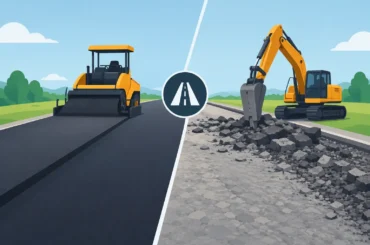
Asphalt is usually easier to repair in sections. Cracks can be filled, damaged areas can be cut out and patched, and a worn driveway can sometimes be resurfaced if the base remains sound. A properly installed asphalt patch can blend well, especially after the surface is sealed.
Concrete repairs can be more complicated. Minor cracks can be sealed, and damaged sections may be removed and replaced, but matching the color and finish of older concrete is difficult. A patch may be structurally sound while still being noticeable. If several slabs have settled or cracked, a full replacement can be more cost-effective than repeated spot repairs.
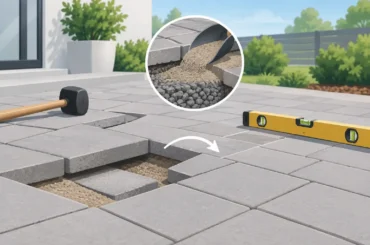
This matters for properties with drainage issues. If runoff has washed out the base beneath a driveway, simply covering the damaged surface will not solve the problem. The failed area may need excavation, base rebuilding, drainage correction, and new pavement or concrete. Fixing the cause protects the investment instead of delaying the next repair.
Appearance, Curb Appeal, and Property Style
Asphalt gives a property a crisp, practical look. Its dark surface frames lawns, stone borders, landscaping, and light-colored siding well. It is especially popular for longer driveways and properties where clean function, affordability, and easy maintenance are top priorities.
Concrete offers more design flexibility. It can be broom-finished for traction, colored, exposed aggregate, or stamped to complement patios, walkways, and masonry features. It is often chosen for homes with a more formal exterior design or for smaller driveways where the added visual detail has a larger impact.
There is also a middle-ground option. A home may use asphalt for the main driveway and pavers or masonry at the entrance, walkway, apron, or borders. This can create a finished look without building the entire driveway from higher-cost decorative materials. The layout should still be planned carefully so the transitions drain correctly and hold up to vehicle traffic.
Traffic, Slope, and Drainage Should Guide the Decision
Before choosing a material, look at how the driveway is actually used. A household with standard passenger vehicles has different needs than a property where heavy pickup trucks, work vans, trailers, or frequent deliveries are common. Thickness, base depth, and edge support should be designed for the expected loads, not guessed after installation.
Slope is equally important. Steep driveways need thoughtful grading and surface traction. Water should not run directly toward a garage, pool around the parking area, or discharge where it can undermine the driveway edge. Drainage swales, catch basins, channel drains, or regrading may be needed before new paving begins.
A contractor should inspect the existing surface, base condition, low spots, runoff patterns, and access before recommending asphalt or concrete. A low bid that skips preparation can become expensive quickly when the new driveway starts settling or cracking early.
Which Driveway Surface Is Right for You?
Choose asphalt if you want a cost-effective surface, faster installation, simpler repairs, and good performance through New Jersey’s changing seasons. It is a strong fit for many residential driveways, parking areas, and properties where practical durability comes first.
Choose concrete if its brighter appearance, design options, and rigid finished surface better match your home or project goals. It can be a worthwhile investment when the site has proper drainage, the base is built correctly, and you understand that repairs may be more visible and costly.
Bentley Paving & Masonry helps property owners look beyond the surface and make decisions based on drainage, condition, budget, and how the space will be used. The best driveway is the one built on solid preparation, with water moving where it should, so it continues to look good and work hard long after the crew leaves.