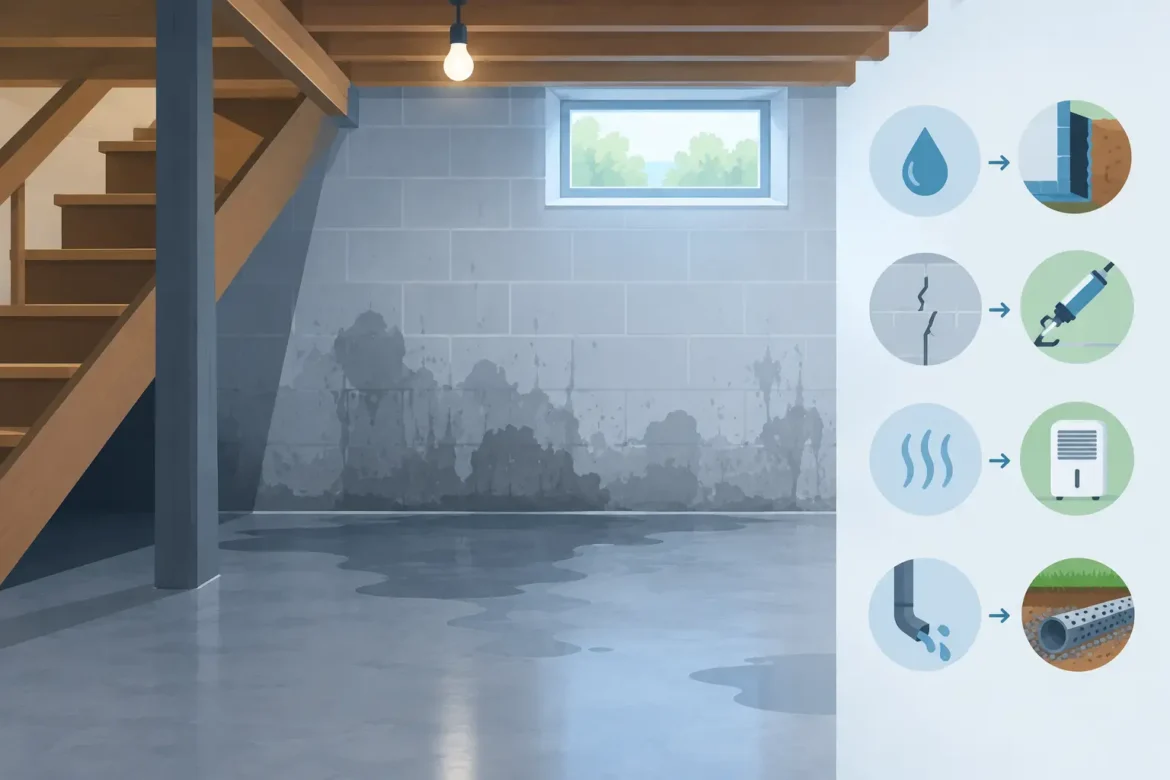
A damp basement rarely starts as a basement problem alone. If you are asking, why is my basement damp, the moisture is often following a path from outside your home: rainwater collecting near the foundation, a clogged gutter, poor grading, a cracked foundation wall, or groundwater pressure after a long New Jersey storm.
The first step is not to cover the smell with a dehumidifier or paint over a water stain. It is to determine where the moisture is coming from and fix the condition that allows it in. A dry, usable basement protects your home’s structure, indoor air quality, and value.
Why Is My Basement Damp After Rain?
When dampness gets worse during or shortly after rain, surface water or groundwater is usually involved. Water naturally moves to the lowest available point. If the ground around your home slopes toward the foundation, or if roof runoff is being discharged too close to the house, that low point may be your basement wall or floor.
In many New Jersey neighborhoods, older homes also have foundation walls and drainage systems that were built long before modern waterproofing standards. A small crack, weak mortar joint, or failed exterior coating may not cause a visible flood, but it can allow steady moisture through the wall. Over time, that moisture can leave white mineral deposits, peeling paint, musty odors, or dark spots along the lower part of the foundation.
Heavy rain can also saturate the soil around the home. As wet soil presses against foundation walls, it creates hydrostatic pressure. Water looks for openings, including hairline cracks, pipe penetrations, and the joint where the basement floor meets the wall. That is why water often appears around the perimeter of a basement rather than in the middle of the room.
Common Causes of a Damp Basement
Poor grading around the foundation
The soil around your foundation should slope away from the house so rainwater drains outward. Settling soil, landscaping changes, patios, walkways, and years of erosion can create low areas that hold water against the foundation instead.
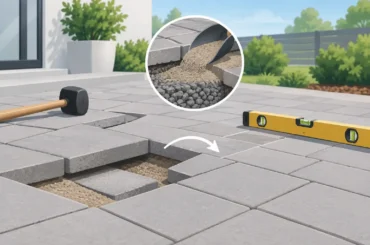
Even a properly paved driveway or patio can contribute to a moisture problem if water is directed toward the house or if adjacent drainage is not considered. The goal is not simply to move water off a hard surface. It is to move it safely away from the building.
Gutters and downspouts that overflow or discharge too close
A clogged gutter can send a concentrated sheet of water down beside the foundation. A short downspout can do the same thing, even when the gutter is clean. During a storm, thousands of gallons of water can come off a roof. If that runoff lands next to the house, it quickly overwhelms the soil’s ability to drain.
Look for overflowing gutters, splash marks on siding, washed-out mulch, or puddles near downspout locations. Downspout extensions or buried drain lines can help, provided they carry water to a suitable discharge area and are installed with the right slope.
Foundation cracks and failing masonry
Concrete and masonry foundations can develop cracks from normal settling, freeze-thaw cycles, soil movement, and age. Not every crack is a major structural concern, but any opening can become a water entry point.
Pay attention to cracks that widen, run horizontally, show signs of wall movement, or repeatedly leak after rain. Crumbling mortar, loose block, and spalled concrete should also be evaluated. Waterproofing works best when the foundation itself is sound and properly repaired.
High groundwater and missing foundation drainage
Some properties sit in areas with naturally high groundwater, especially during spring snowmelt and extended wet weather. If a home lacks working footing drains, water can build up around the foundation and find its way inside.
An interior perimeter drain and sump pump may be the practical answer when exterior excavation is not possible or when groundwater is the main concern. However, a sump system manages water after it reaches the foundation area. It does not replace fixing obvious grading and roof runoff problems outside.
Condensation from humid air
Not every damp basement is leaking. In summer, warm humid air can hit cool basement walls, floors, pipes, and ductwork and form condensation. This is especially common in unfinished basements with limited airflow.
Condensation tends to make surfaces feel damp without creating a clear path of water after rainfall. You may see moisture on cold water pipes, metal ducts, or windows. A properly sized dehumidifier, insulated pipes, sealed foundation openings, and controlled ventilation can make a real difference. Still, if humidity remains high after these steps, it is wise to rule out water intrusion.
Plumbing leaks and appliance problems
A leaking washing machine hose, water heater, utility sink, or plumbing line can look like a waterproofing issue. Check whether the damp area is near fixtures or appliances and whether it changes when no rain has fallen.
This is one reason diagnosis matters. Installing drainage to solve a plumbing leak wastes money, while calling a plumber for a wall leak leaves the real problem untouched.
How to Tell Where Basement Moisture Is Coming From
Start with the timing. Moisture that appears after rain points toward exterior drainage, foundation seepage, or groundwater. Dampness that remains steady through dry weather may be condensation, a plumbing issue, or moisture vapor coming through an older slab.
Next, inspect the location. Water at the base of walls, especially at one corner, often relates to outside drainage or cracks. Dampness in the center of a floor can be groundwater pressure or vapor through the slab. A wet ceiling, wall near a pipe, or area around a utility appliance may indicate plumbing.
A simple plastic-sheet test can help identify vapor. Tape a square of clear plastic tightly to a dry section of the basement floor or wall and leave it for a day or two. Moisture behind the plastic suggests moisture moving through the concrete. Moisture on the room-facing side points more toward humid indoor air. It is a useful clue, not a substitute for a full site inspection.
Fix the Water Source Before Finishing the Basement
The best basement waterproofing plan often begins outdoors. Clean gutters, repair damaged sections, and make sure downspouts move water well away from the foundation. Correct low spots around the home and avoid piling mulch, soil, or stone against siding or foundation vents.
Where surface water is difficult to control, a drainage contractor may recommend swales, catch basins, channel drains, or buried drain lines. The right solution depends on the property’s slope, soil, paved areas, neighboring lots, and where water can legally and safely discharge. There is no one-size-fits-all drain layout.
For water entering through foundation walls, exterior waterproofing can be the most complete repair. This generally involves excavating along the affected wall, repairing cracks or damaged masonry, applying a waterproof barrier, and installing proper drainage material. It is more involved than an interior coating, but it addresses water before it reaches the wall.
Interior drain systems are often a strong solution for recurring groundwater seepage or when exterior access is limited by decks, driveways, landscaping, or property lines. A perimeter drain directs water to a sump basin, where a pump sends it away from the home. The pump should have a reliable discharge route and, in areas prone to outages, a battery backup is worth considering.
Waterproof coatings and sealers have a place for minor moisture control, but they are not a cure for active water pressure, poor grading, or serious cracks. If water is pushing through a wall, a coating alone can eventually blister, peel, or fail.
Do Not Ignore the Warning Signs
A musty smell, mold growth, peeling paint, rusty metal, warped wood, efflorescence, or damp carpet are all signs that basement moisture needs attention. Mold can affect stored belongings and indoor air, while repeated moisture can damage framing, finishes, and insulation.
It is also wise to act before finishing a basement. New drywall, flooring, cabinetry, and insulation can hide a moisture problem temporarily, then turn a manageable repair into a costly tear-out. Make the basement dry first, then build the space you want with confidence.
For homeowners dealing with repeated seepage, pooling water, or drainage that never seems to improve, a professional inspection can identify how water is moving across the property and around the foundation. Bentley Paving & Masonry approaches drainage and waterproofing with the full site in mind, because the driveway, grading, gutters, hardscape, and foundation can all affect the same water problem.
A damp basement is your home telling you where water is winning. Follow the timing, trace the path outside, and correct the source before it has a chance to cause bigger damage indoors.