A yard that stays soft for days after a storm is doing more than making a mess of your shoes. Standing water can kill grass, wash out mulch, undermine patios, crack pavement, and send moisture toward the foundation. Knowing how to improve yard drainage starts with finding where the water comes from and where it is supposed to go.
In New Jersey, drainage problems often show up after heavy rain, spring thaw, or a fast summer downpour. Many properties have a mix of old grading, compacted soil, driveways, patios, and landscaping that changed the way water moves over time. The right repair is not always a drain in the middle of the lawn. Often, the best result comes from correcting the slope first, then adding a drainage system where it will do the most good.
Start by Finding the Source of the Water
Before moving soil or installing pipe, watch the property during a rainstorm if it is safe to do so. Note where the water enters the yard, where it collects, and whether it moves toward the house, garage, driveway, or neighboring property. A low spot in the lawn may be the visible problem, but water may actually be coming off a roof, a sloped driveway, or a patio pitched in the wrong direction.
Look for repeated puddles, muddy grass, soil erosion, green staining on masonry, mulch that washes away, and water marks along the foundation. Basement dampness or a wet garage after rain can also point to an exterior drainage issue. These clues help separate a surface-water problem from a potential foundation waterproofing concern.
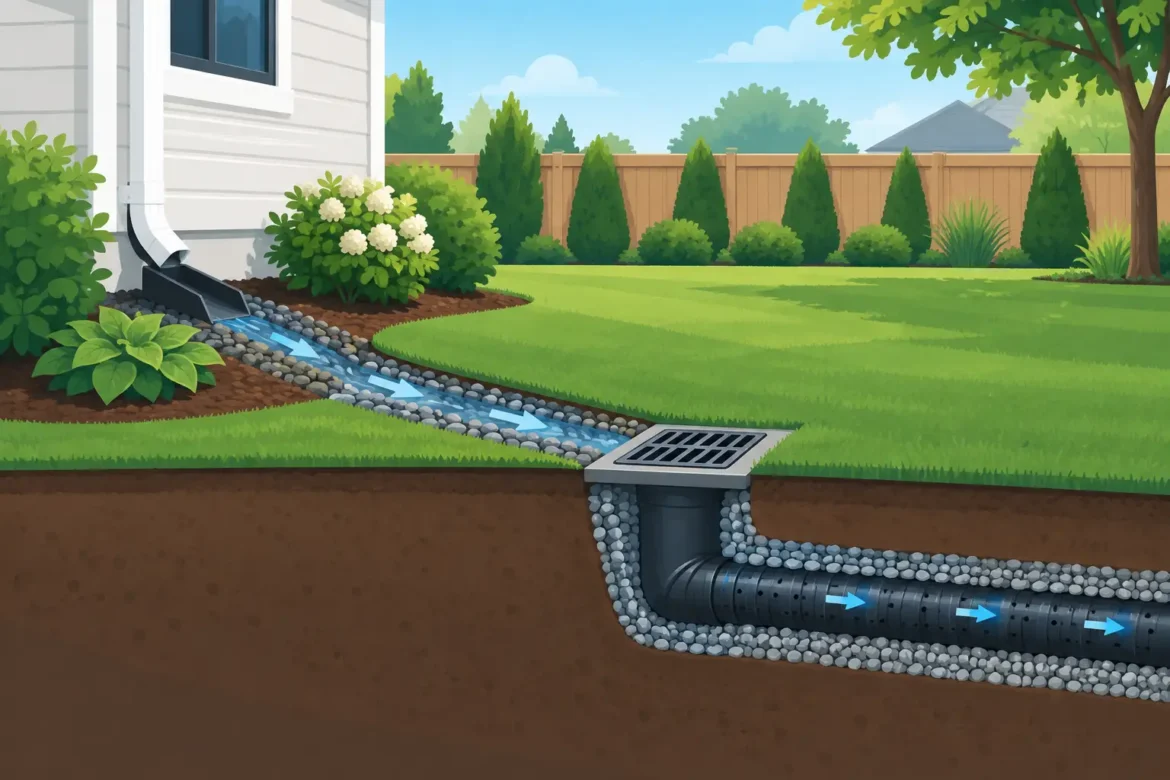
Downspouts deserve special attention. If a downspout releases roof runoff beside the foundation or into a small planting bed, even a well-graded yard can become overwhelmed. Extending that discharge to a proper outlet is often one of the simplest improvements a homeowner can make.
Improve Yard Drainage With Proper Grading
Grading is the shape and slope of the ground. It is the first line of defense because it uses gravity instead of relying entirely on pipes, pumps, or catch basins. Soil near the house should slope away from the foundation so rainwater does not sit against the walls.
A gradual slope is usually better than a sudden drop. It should carry water away without creating erosion, an awkward step in the yard, or drainage trouble for another area of the property. The exact solution depends on lot size, existing elevations, utility locations, and the location of driveways, patios, and neighboring homes.
Adding clean fill and topsoil can correct a shallow low area, but simply covering a puddle is not always a fix. If the soil below is heavily compacted or the new grade has nowhere to discharge, water may return after the next major storm. Grading has to create a continuous path for water to leave the problem area.
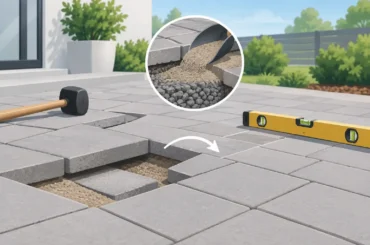
For yards with patios, walkways, or retaining walls, the surface pitch matters just as much as lawn grading. A beautiful paver patio can become a water problem if it drains toward the home. Proper base preparation and a planned slope protect the hardscape and help keep water moving where it belongs.
Control Roof Runoff Before It Floods the Yard
Roofs move a surprising amount of water in a short time. Gutters that overflow, are clogged, or empty too close to the house can create saturated soil and foundation pressure. Clean gutters regularly, repair loose sections, and make sure downspouts carry water well away from the building.
In some cases, a simple extension is enough. On tighter properties, a buried solid pipe can route water to a suitable discharge point. That point must be chosen carefully. Water should not be sent onto a driveway where it can freeze, against a retaining wall, or toward a neighbor’s property.
If water from several downspouts is being collected in one system, the pipe size and outlet capacity matter. An undersized line can back up during the exact storm it was meant to handle. This is where experienced drainage planning saves time and unnecessary rework.
Choose the Right Drain for the Problem
Drains work best when they solve a specific problem rather than being added as a guess. A catch basin is useful where surface water concentrates, such as the bottom of a driveway, beside a patio, or in a low landscaped area. It captures water at the surface and directs it through solid pipe to an approved outlet.
A French drain is different. It is designed to collect water moving through the soil. It generally uses perforated pipe surrounded by clean stone and protected with filter fabric. French drains can help with wet lawns, saturated planting areas, or water pressure near exterior foundation walls, but they need the correct depth, slope, and discharge point to work properly.
Channel drains are often a smart choice at garage entrances, along the edge of a patio, or where a paved surface meets a building. Their long, narrow grate intercepts sheet flow before it reaches a door, wall, or lower surface. They are especially helpful when regrading is limited by an existing driveway or hardscape.
A dry well can be an option when the soil drains well enough to accept the water and local site conditions allow it. It is not the right answer for every New Jersey property, particularly where high groundwater, dense clay soil, or a small lot limits its performance. The system has to match the site, not the other way around.
Protect Driveways, Patios, and Walkways
Pavement is not waterproof. Water that gets beneath asphalt, concrete, or pavers can weaken the base material and lead to settlement, cracks, potholes, or heaving during freeze-thaw cycles. If water regularly runs across a driveway or pools at the edge, the repair may involve more than patching the surface.
A properly installed driveway should have a planned pitch that directs water away from the garage and prevents ponding. Where water enters from an uphill lawn or adjacent area, a swale, channel drain, curb edge, or catch basin may be needed to intercept it. The same principle applies to patios and walkways: attractive surfaces should also shed water safely.
Retaining walls need drainage behind them as well. Without stone backfill, drainage pipe, and proper outlets, water pressure can build up behind the wall. That pressure can cause staining, movement, cracking, or early failure. Drainage is not an extra feature on a retaining wall. It is part of building it correctly.
Avoid Quick Fixes That Create Bigger Problems
Filling a low spot with a few bags of soil, cutting a shallow trench through the lawn, or directing a downspout across the driveway may seem like an easy weekend solution. Sometimes a minor adjustment helps, but shortcuts can shift water toward the house or create an icy hazard in winter.
Be cautious about using gravel alone as a drainage fix. Gravel may make a muddy area look better temporarily, but it does not move water unless there is a properly designed drainage path below it. Likewise, landscape fabric placed incorrectly can clog with sediment and prevent water from reaching the system.
Do not connect yard drainage to a sanitary sewer line. Drainage connections are subject to local rules, and improper connections can create serious problems. A contractor familiar with the area can help identify practical discharge options while keeping the work focused on long-term performance.
When It Is Time to Call a Drainage Contractor
A professional evaluation is worthwhile when water reaches the foundation, enters a basement or garage, damages pavement, repeatedly kills landscaping, or causes erosion after every major storm. It is also smart to get help before installing a new patio, driveway, retaining wall, or major landscape feature. Building drainage into the project is usually more efficient than correcting it after the surface is finished.
Bentley Paving & Masonry evaluates how grading, paved surfaces, masonry, and drainage work together on a property. That matters because a solution should protect the home while also preserving the appearance and service life of the driveway, patio, or walkway around it.
A dry, usable yard does not happen by accident. When water has a clear route away from your home and outdoor surfaces, the whole property is easier to enjoy and easier to maintain through every New Jersey season.