A driveway can look tired long before it has truly failed. Faded color, shallow cracks, and a rough surface may make asphalt overlay versus replacement feel like a simple price decision. It is not. The right choice depends on what is happening below the surface, how water moves across the property, and whether the pavement still has a stable base to support new asphalt.
For New Jersey homeowners, property managers, and business owners, a good paving decision should improve appearance without paying for work the property does not need. It should also avoid a short-term fix that covers a deeper problem and leads to another major expense a few years later.
What an Asphalt Overlay Actually Does
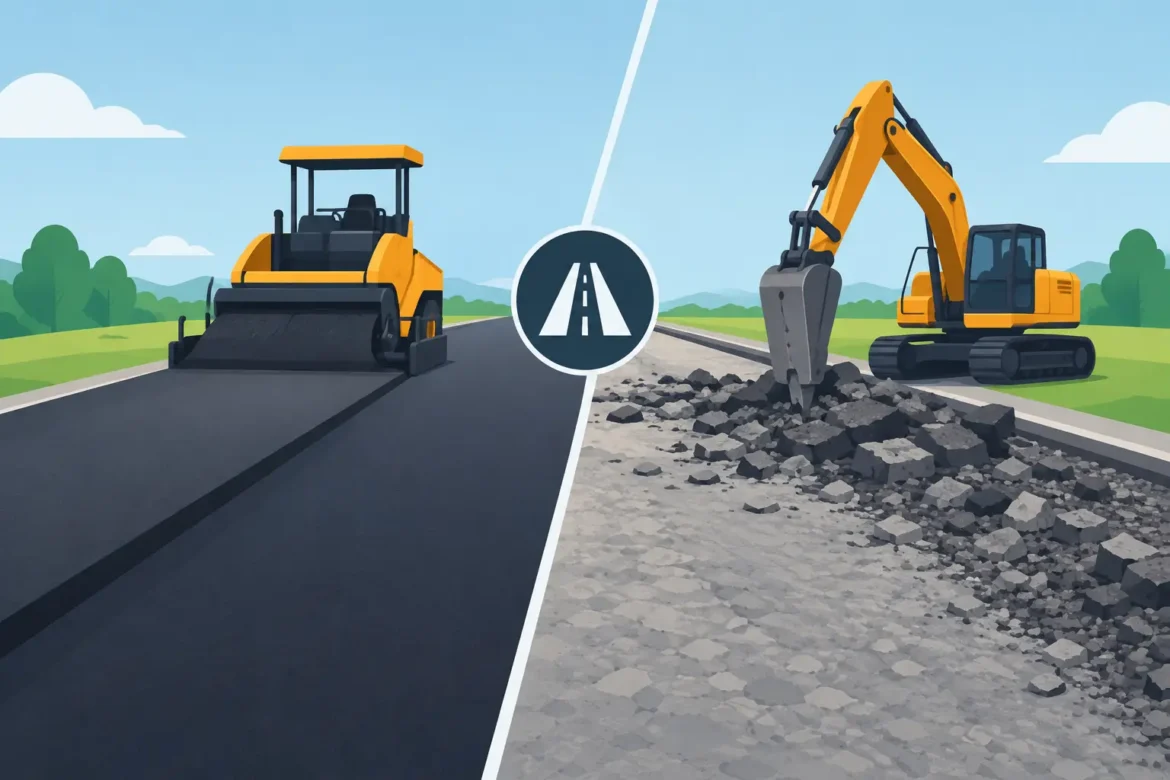
An asphalt overlay, sometimes called resurfacing, places a new layer of hot-mix asphalt over existing pavement. Before the new material goes down, a qualified paving contractor should clean the surface, repair isolated damaged areas, address cracks where appropriate, and mill or adjust transitions near garages, curbs, sidewalks, and drains.
The finished surface is smooth, dark, and clean-looking. It can restore curb appeal quickly and make a residential driveway or commercial lot more comfortable and safer to use. When the existing pavement and base are sound, an overlay is often a cost-effective way to add years of service life.
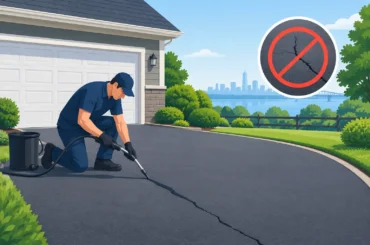
An overlay is not the same as simply pouring new asphalt on top of a problem. If cracks are caused by a weak base, water intrusion, or pavement movement, they can work their way back through the new surface. This is called reflective cracking. Proper preparation matters because the new layer is only as dependable as the pavement beneath it.
When an Overlay Makes Sense
An overlay is usually a good option when the existing asphalt has surface-level wear but still has a stable foundation. The pavement may be oxidized, faded, lightly cracked, or slightly uneven from years of traffic and weather. It may also have small areas of damage that can be cut out and repaired before resurfacing.
For a driveway, this often means the edges are holding together, there are no major depressions, and the surface drains reasonably well. For a parking lot, it means the lot is still structurally sound even if it looks worn and no longer presents the image a business or property deserves.
A properly planned overlay can be practical when you want to improve appearance, protect the existing pavement from further weathering, and control costs. It also generally involves less demolition than a full replacement, which can reduce disruption around a home or business.
Still, grade changes need careful attention. Adding asphalt raises the finished surface. If the driveway already sits close to a garage threshold, doorway, sidewalk, curb, or catch basin, the contractor must account for that height. An overlay that creates a poor transition or directs water toward a building is not a good repair.
Signs Your Pavement May Be a Good Overlay Candidate
Pavement may be suitable for an overlay when the cracking is limited and the surface remains firm under normal vehicle use. Small potholes or failed sections do not automatically rule it out if those areas can be repaired down to sound material first.
The key question is whether the base has stayed intact. A paving professional should look beyond the color of the asphalt and assess drainage, low spots, edge failure, cracks, traffic loads, and prior repairs. A driveway used by passenger vehicles has different demands than a commercial lot that sees delivery trucks, dumpsters, or frequent turning traffic.
When Asphalt Replacement Is the Better Investment
Full asphalt replacement removes the existing pavement and rebuilds the surface from the base up. Depending on site conditions, that can include excavation, installing or rebuilding aggregate base material, compacting it properly, correcting grades, and placing new asphalt at the proper thickness.
Replacement costs more upfront because it involves more labor, material, equipment, and disposal. But it gives the contractor access to the problems an overlay cannot fix. If the base is soft, the driveway is holding water, or the pavement has widespread structural failure, replacement is often the more honest and cost-effective recommendation over the long run.
These conditions commonly point toward replacement:
- Deep alligator cracking that resembles a web of interconnected breaks
- Repeated potholes, especially in the same areas after prior patching
- Large low spots, standing water, or drainage that runs toward a garage or foundation
- Sinking, heaving, or soft spots caused by base failure or moisture
- Crumbling edges and widespread breakup across the driveway or lot
- Pavement that has already received multiple overlays and sits too high
Alligator cracking is one of the clearest warning signs. It usually means the pavement structure below the surface has weakened. Covering it with new asphalt may improve the appearance for a short time, but the movement beneath will continue.
Replacement is also worth considering when the property has changed. A residential driveway may now need to support heavier vehicles, or a commercial lot may have new traffic patterns that place greater stress on certain areas. Rebuilding the base and pavement thickness for actual use can prevent premature failure.
Drainage Can Decide the Job
Water is one of asphalt’s biggest enemies. In New Jersey, rain, snow, freeze-thaw cycles, and runoff all put pressure on paved surfaces. Water that enters cracks can weaken the base. Water that sits on top of asphalt speeds up deterioration. Water that drains toward a building can create an issue far beyond the driveway.
That is why an asphalt decision should never be made by surface appearance alone. If a driveway has puddles near the garage, water at the bottom of a slope, or runoff washing along the edge of the pavement, the grading and drainage need to be part of the plan.
Sometimes an overlay can work with targeted drainage improvements. In other cases, full replacement is needed to establish the right pitch and direct water away from structures. Drainage solutions may involve regrading, swales, trench drains, catch basins, or other site-specific work. The best answer depends on where the water starts, where it needs to go, and what lies beneath the surface.
Comparing Cost, Service Life, and Disruption
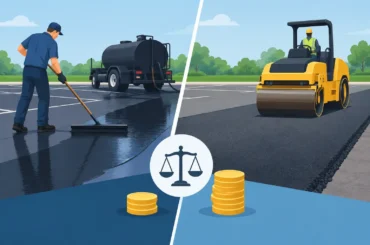
Overlay work is usually less expensive than replacement because it preserves the existing base and reduces demolition. It can be a smart investment for pavement with good bones. It also tends to move faster, which is valuable for busy homes, apartment communities, retail locations, and other properties where access matters.
Replacement is a larger project, but it addresses deeper failures and allows for proper base preparation and grade correction. When a surface has reached the end of its useful life, spending less on an overlay can become more expensive if cracking, settling, and drainage problems return quickly.
Service life varies with traffic, maintenance, drainage, installation quality, and weather exposure. A well-installed overlay on a stable base can provide many additional years of useful service. A new asphalt installation with a properly compacted base can serve even longer, provided it is maintained and water is kept under control.
Neither option should be chosen by price alone. The lowest estimate can leave out necessary prep work, base repair, edge treatment, or drainage corrections. A clear estimate should explain what will be removed, repaired, installed, and finished, so there are no surprises after work begins.
How to Make the Right Call for Your Property
Start with an on-site assessment rather than a photo or a rough square-foot price. The condition of the base, the direction of water, the age of the pavement, and the type of vehicles using it all affect the recommendation.
Ask the contractor to explain why an overlay is appropriate or why replacement is necessary. You should understand whether cracks will be repaired, whether failed areas will be excavated, how transitions will be handled, and what steps will protect drainage. Straight answers are especially important when comparing estimates that may look similar but include very different scopes of work.
Bentley Paving & Masonry approaches paving as a property investment, not just a blacktop surface. A driveway or parking lot should look sharp, drain correctly, and hold up to the work it does every day.
If your asphalt is worn but stable, an overlay may be the sensible way to restore it. If the pavement is sinking, breaking apart, or directing water where it does not belong, replacement may save you from paying twice. A careful inspection now can turn a frustrating pavement problem into a durable improvement you can rely on for years.