A driveway can look tired long before it is ready to be replaced. Fading color, light surface wear, and a few small cracks often leave property owners weighing sealcoating versus resurfacing costs. The lower-priced option can be the right investment, but only when the asphalt underneath is still structurally sound. Putting a fresh black coating over failing pavement may improve the appearance for a season while allowing the real problem to grow.
For New Jersey homes and commercial properties, the decision usually comes down to one question: are you protecting good asphalt, or trying to cover up worn-out asphalt? Freeze-thaw cycles, snow removal, vehicle traffic, water runoff, and poor drainage all affect the answer.
Sealcoating Versus Resurfacing Costs: The Basic Difference
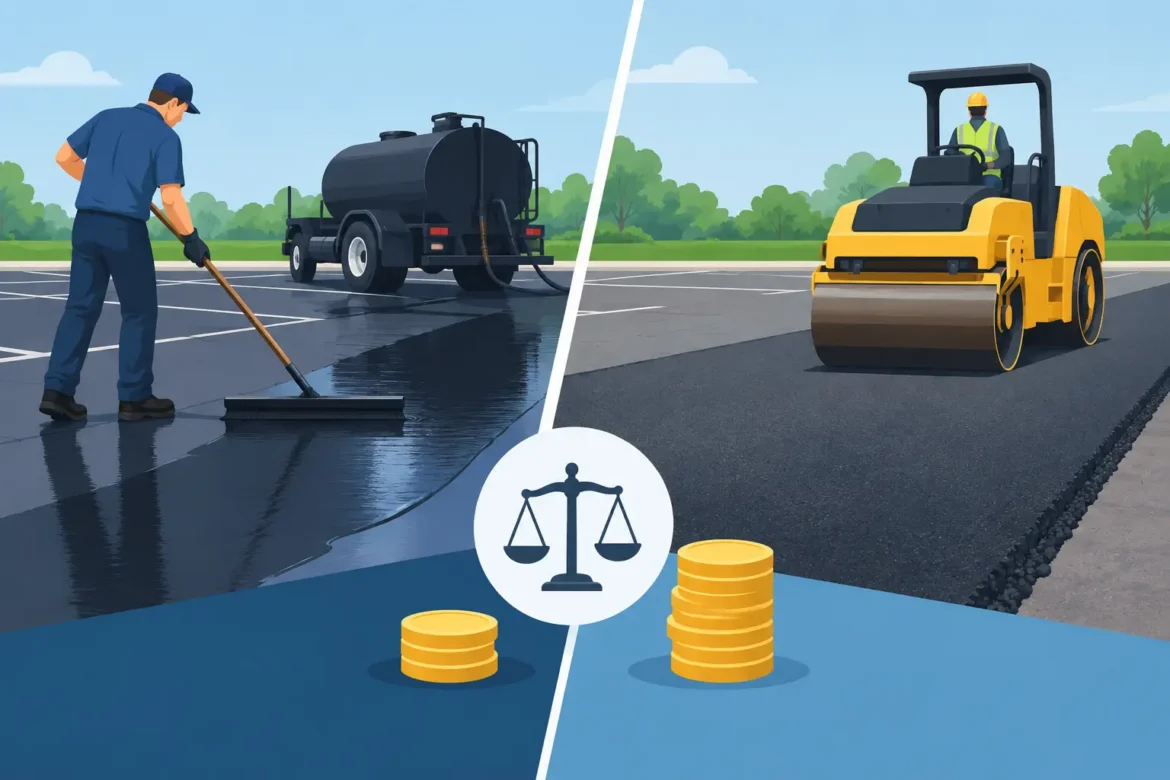
Sealcoating is a maintenance service. A protective coating is applied over existing asphalt to restore its dark appearance and help shield the surface from sunlight, moisture, salt, oil, and everyday wear. Small cracks should be cleaned and filled first, but sealcoating does not add structural strength or correct major damage.
Resurfacing, also called an asphalt overlay, is a repair and renewal service. The existing pavement is prepared, damaged sections may be repaired, and a new layer of hot-mix asphalt is installed over the surface. It creates a new driving layer and is designed for pavement that is beyond simple maintenance but still has a stable enough base to support an overlay.
That difference explains the cost gap. Sealcoating uses less material, less labor, and less equipment. Resurfacing involves asphalt milling or surface preparation when needed, repairs, heavy paving equipment, and a much thicker layer of material.
What Sealcoating Typically Costs
Sealcoating is generally the more affordable way to protect a driveway or parking lot. Pricing is often calculated by square footage, but a small residential driveway may be priced as a minimum job because preparation, equipment, and crew time are still required.
For a typical property, the final price depends on surface size, the number of cracks, the amount of cleaning needed, access to the area, edging, and whether the pavement needs oil-spot treatment. A simple, well-maintained driveway costs less per square foot than a heavily cracked lot with weeds along the edges and vehicles that must be worked around.
The value of sealcoating is not just the fresh black finish. When applied at the right time, it can slow oxidation and surface wear, helping asphalt remain flexible and protected. Most asphalt surfaces benefit from regular sealcoating on a schedule that matches their traffic level and condition. A busy commercial lot may need more frequent attention than a lightly used residential driveway.
Still, a coating has limits. It will not fix potholes, alligator cracking, sunken tire paths, crumbling edges, or water that sits on the pavement after rain. Those conditions point to a repair need below the surface.
What Resurfacing Typically Costs
Resurfacing costs more because it is a larger construction project. The crew must assess the existing base, repair failed areas, address cracks and low spots, prepare transitions at garages or curbs, and install new asphalt at the proper depth. The work also requires skilled compaction so the finished surface drains correctly and holds up under use.
The overall cost can vary widely based on several job-specific conditions:
- The size and shape of the driveway or parking area
- The thickness of the new asphalt layer
- The amount of patching or base repair needed first
- Whether milling is needed near garages, curbs, sidewalks, or drains
- Access for paving equipment and trucks
- Drainage corrections, grading, or edging work
- Striping needs for commercial parking lots
A larger, open parking lot can sometimes have a lower per-square-foot resurfacing price than a small, tight driveway because crews can work more efficiently. On the other hand, a residential driveway with steep grades, narrow access, failing edges, and water runoff issues may require more preparation than its size suggests.
When comparing estimates, make sure the scope is clear. An inexpensive overlay that skips failed areas or ignores standing water is not the same job as a properly prepared resurfacing project. Good asphalt work starts with the condition below the visible surface.
When Sealcoating Is the Better Buy
Sealcoating makes financial sense when the asphalt is in good overall condition and you are staying ahead of damage. The surface may be gray, dull, or lightly worn, but it should remain mostly smooth and firm under traffic. Minor cracks can often be filled before the coating is applied.
It is especially useful for owners who want to preserve a newer driveway, improve curb appeal before selling a property, or keep a commercial lot looking cared for between larger paving projects. The cost is modest compared with resurfacing, and regular maintenance can help delay the need for more extensive work.
Think of sealcoating as protection, not restoration. It works best before the pavement has started breaking apart. Once water reaches the base beneath the asphalt, the repair needs become more involved and more expensive.
When Resurfacing Is Worth the Higher Cost
Resurfacing is usually the better value when the existing driveway or lot has widespread cracking, rough areas, shallow depressions, patched sections, or a worn surface that no longer drains well. It provides a clean, renewed asphalt layer without the full cost of removing and rebuilding everything from the ground up.
However, resurfacing only works when the foundation is still serviceable. If the base has failed, the pavement is deeply sunken, potholes are widespread, or drainage has been sending water underneath the asphalt for years, an overlay may not last. In that situation, full removal and replacement of failed sections may be the honest recommendation.
This is why a site inspection matters. A contractor should look beyond the color of the pavement and identify whether cracks are surface-level, whether edges are breaking down, and where water travels after a storm. A driveway that looks like it needs resurfacing may only need crack repair and sealcoating. Another driveway that looks acceptable from the street may have a soft base that needs more than an overlay.
Do Not Ignore Drainage in the Cost Comparison
Water is one of asphalt’s biggest enemies. If a driveway holds puddles, runoff flows toward the garage, or downspouts discharge beside the pavement, neither sealcoating nor resurfacing alone will solve the source of the damage.
Drainage work can increase the immediate project cost, but it often protects the value of the paving work. Regrading, drainage channels, catch basins, or directing water away from the asphalt can prevent repeated cracking, undermining, and edge failure. For New Jersey properties dealing with heavy rain, snowmelt, and winter freezing, this is not an optional detail when drainage is clearly causing pavement problems.
A practical estimate should explain whether drainage is part of the issue and whether it should be addressed before new material goes down. Paying for an overlay without correcting water flow can mean paying again sooner than expected.
How to Compare Estimates Fairly
The lowest number on paper is not always the lowest long-term cost. Ask what preparation is included, how cracks and failed areas will be handled, what material will be used, and whether the contractor has accounted for drainage and transitions. For resurfacing, ask about asphalt thickness and whether the existing surface will be properly cleaned and prepared.
It also helps to compare the expected purpose of each option. If your pavement is healthy and you want preventive maintenance, sealcoating is often the smart, cost-conscious choice. If it has widespread wear but a sound foundation, resurfacing can give you many more years of useful service. If the base is failing, neither option should be used as a shortcut around necessary repairs.
Bentley Paving & Masonry approaches the decision by looking at the pavement condition, water flow, traffic demands, and the result you expect from the investment. A clear estimate should give you a practical recommendation, not push every property toward the same service.
The best time to make this decision is before small cracks become potholes and drainage problems become base failures. A professional evaluation can show whether your asphalt needs simple protection, a new wearing surface, or targeted repairs that keep the whole property safer, cleaner, and better looking.