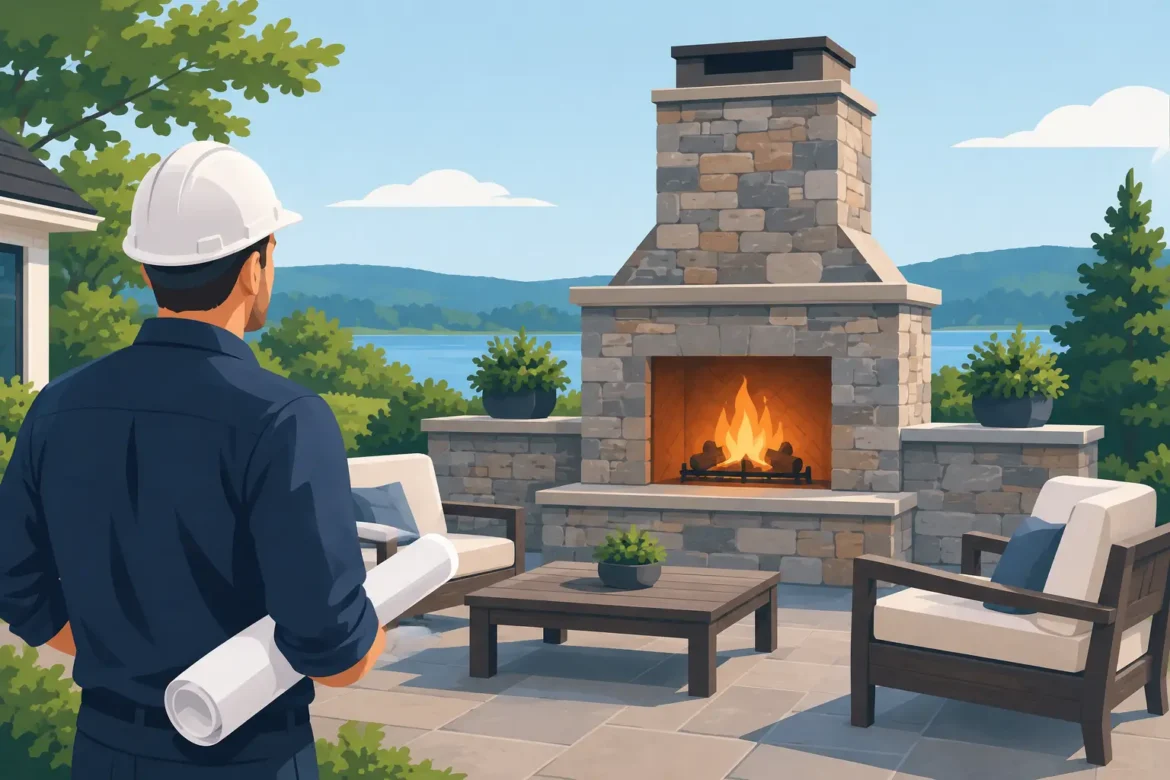
A fireplace can turn a patio that gets used a few weekends each summer into the place everyone gathers from the first cool night of fall through early spring. But it is not just a nice-looking stone feature. When you hire an outdoor stone fireplace builder NJ homeowners can rely on, you are trusting that contractor with heat, weight, drainage, access, and the long-term condition of your outdoor living space.
A well-built stone fireplace should look like it belongs on the property, draw people outside, and stand up to New Jersey weather year after year. Getting there takes more than stacking attractive stone around a firebox. The base has to be right, the materials have to handle heat and moisture, and the finished layout needs to work with the way your family actually uses the yard.
Start With the Space, Not the Fireplace
Many homeowners start with a photo of a large fireplace and try to fit it into the patio later. That can lead to a feature that dominates the yard, blocks a view, or leaves too little room for seating and walking. The better approach is to look at the entire outdoor area first.
Consider where people enter the patio, where furniture will sit, and how smoke will travel based on typical wind direction. A fireplace placed too close to doors, low branches, fencing, or a neighbor’s property can create headaches after it is built. It also needs to be positioned with enough clearance to use safely and maintain comfortably.
The size of the feature should match the patio. A compact fireplace can make sense beside a small paver seating area. A larger wood-burning fireplace may be the right anchor for a broad patio with a dining area, outdoor kitchen, or retaining wall. There is no one-size-fits-all answer. The best design is the one that fits the property and gives people room to enjoy it.
What a Quality Outdoor Stone Fireplace Builder in NJ Plans For
New Jersey gets freeze-thaw cycles, heavy rain, humid summers, and cold winters. Those conditions expose shortcuts quickly. Water that gets behind stone, settles beneath a base, or freezes in poorly finished joints can lead to movement, cracking, and costly repairs.
A dependable fireplace project begins with a stable foundation and proper site preparation. The structure is heavy, especially once stone veneer, a hearth, and a chimney are added. It cannot simply sit on an existing patio unless that patio was designed to support the load and remains in sound condition. In many cases, the fireplace needs its own properly prepared footing or reinforced base.
Drainage matters just as much. If a patio already has puddling, soft ground, or water running toward the home, those issues should be addressed before adding masonry. A beautiful fireplace will not fix a poorly draining yard. In fact, it can make access and drainage corrections harder if they are ignored during the initial build.
The firebox, flue, chimney, and heat-resistant materials must also be installed correctly. Wood-burning fireplaces need a design that directs smoke upward and away from the seating area. Gas fireplaces have different requirements, including fuel-line planning and appropriate components. Local code requirements and permit needs can vary by town, so an experienced contractor should help establish what applies to your project before work begins.
Stone Choices That Hold Up and Look Right
Natural stone gives an outdoor fireplace depth and character that works well with New Jersey homes, patios, walls, and walkways. Options such as fieldstone, bluestone, ledgestone, and cultured stone can create very different looks, from traditional and rustic to clean and more formal.
The right choice depends on the home and the surrounding hardscape. A random fieldstone fireplace can look at home near a wooded property or classic colonial. Cut stone with cleaner lines may suit a newer home or a patio built with crisp, geometric pavers. If you already have stone steps, a retaining wall, or a veneer on the house, matching or complementing those materials helps the entire property feel planned rather than pieced together.
Natural stone typically offers a one-of-a-kind appearance, but it can be more labor-intensive and may cost more depending on the material and installation. Manufactured stone can provide a consistent look and a wider range of colors at a different price point. Neither option is automatically better. The important thing is using quality materials suited for exterior masonry and installing them over a sound structure.
Wood-Burning or Gas: Choose for How You Gather
A wood-burning fireplace offers the real crackle, warmth, and smell that many homeowners want. It creates a true focal point for cool evenings and can make an outdoor space feel like an extension of a family room. The trade-off is that it requires firewood storage, ash cleanup, and more attention while it is in use.
Gas is often the convenient option. It starts quickly, burns cleanly, and makes it easy to enjoy a short weeknight fire without hauling wood or waiting for coals to cool. It may be especially practical for homeowners who want the atmosphere of a fire more often than they want the full ritual of a wood-burning fireplace.
Your decision should come down to daily use, local regulations, budget, and access to utilities. A contractor should ask those questions early because the answer affects the fireplace design, mechanical planning, and overall project scope.
Build the Fireplace as Part of a Complete Patio Plan
The strongest outdoor projects work together. A fireplace may be the centerpiece, but the patio, walkways, seating walls, steps, lighting, and drainage all affect how useful it becomes. For example, a seating wall can provide extra places for guests without filling the patio with furniture. A walkway can create safe access from the driveway or back door. Proper grading can keep water from collecting around the hearth after a hard rain.
This is where working with a contractor that understands both masonry and site work makes a real difference. Bentley Paving & Masonry can look beyond the fireplace itself and help homeowners plan the patio base, pavers, stonework, drainage, and access as one connected project. That avoids the common problem of hiring separate trades that do not coordinate their work.
It is also worth thinking about practical details before construction starts. Where will firewood go? Is there a nearby seating area with enough room for guests to move around? Will the fireplace block the path to the grill, pool, or garden? Do you want a raised hearth for seating, or a lower profile that keeps the view open? These decisions are easier and less expensive to make on paper than after the stonework is complete.
Questions to Ask Before You Hire
Price matters, but the lowest estimate is not always the best value on a masonry project. Ask what is included in the foundation, firebox, chimney, stone installation, and cleanup. Make sure the contractor explains whether drainage work, patio repairs, permits, gas connections, or demolition are part of the proposal or separate items.
You should also ask about material options, expected scheduling, and how the contractor handles changes if site conditions are different than expected. An honest contractor will not promise that every project is simple before seeing the property. Slopes, existing patios, buried utilities, wet areas, and access for equipment can all affect the work.
Most of all, look for clear communication and workmanship that is built for the long haul. Outdoor masonry is a visible investment, but the parts you do not see – the base, drainage, reinforcement, and heat-resistant construction – are what protect that investment.
A stone fireplace should give your property a reason to be enjoyed after the sun goes down and after summer ends. Plan it carefully, build it on a solid foundation, and choose a contractor who treats the entire outdoor space with the same care as the finished stonework.