A concrete driveway should do more than look clean on the day it is poured. It needs to carry vehicles through New Jersey winters, shed water away from the garage and foundation, and hold up to daily use without becoming a patchwork of cracks and puddles. That is why concrete driveway installation New Jersey property owners can rely on starts well below the finished surface.
For a homeowner replacing an old driveway, the visible concrete is only part of the job. Excavation, a properly prepared stone base, correct slope, reinforcement, joint placement, and curing all affect how the driveway performs years from now. Skipping those details may lower an initial price, but it can lead to settling, standing water, and costly repairs later.
What a Proper Concrete Driveway Installation Includes
Every property is different. A short, flat driveway on firm ground requires a different approach than a long driveway with a slope, poor drainage, or a garage that sits lower than the street. The first step is evaluating the existing surface, soil conditions, vehicle traffic, and where rainwater currently travels.
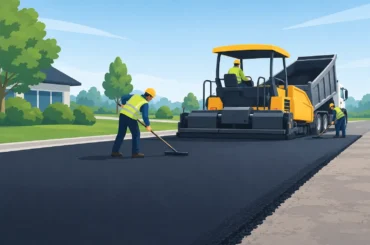
Old concrete, asphalt, loose fill, and unsuitable material should be removed as needed. The area is then graded and compacted before a stone base is installed. That base helps support the slab and provides a stable, even foundation. Concrete placed over soft, poorly compacted ground can settle or crack even when the concrete itself is high quality.
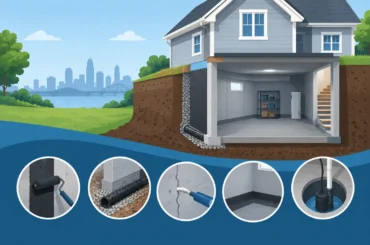
The driveway also needs the right pitch. Water should move away from the home, garage, and other structures instead of pooling at the entrance or running toward the foundation. In some cases, correcting the driveway slope is enough. On other properties, a drainage solution may be needed to manage roof runoff, low spots, or water coming down a hill.
Thickness and reinforcement matter
Most residential concrete driveways are designed for passenger vehicles, SUVs, and light trucks. Areas that will carry heavier vehicles, such as work vans, RVs, delivery trucks, or dumpsters, may need additional thickness and a stronger base. The apron near the street, turning areas, and sections near a garage can also see more stress than the rest of the driveway.
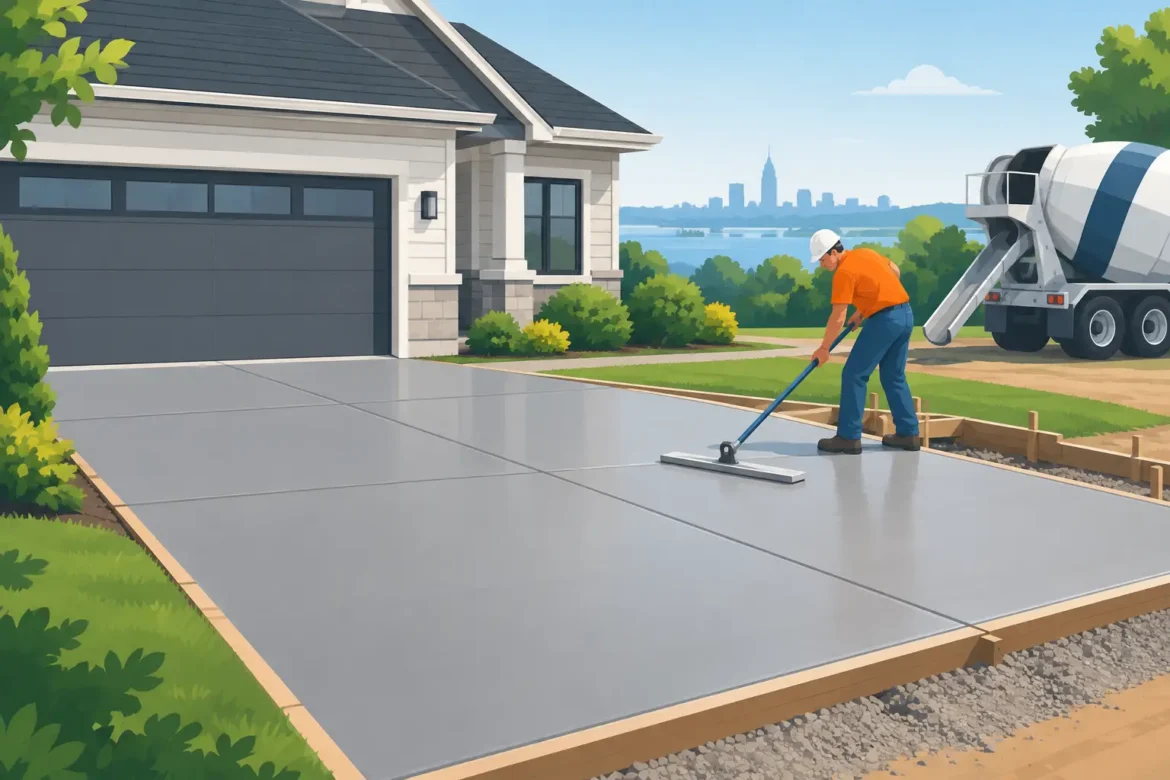
Reinforcement can help the slab perform as intended, but it does not replace proper excavation and base preparation. Steel reinforcement or wire mesh should be correctly placed within the concrete, not left sitting at the bottom where it provides little benefit. A contractor should also plan control joints at appropriate locations. Concrete naturally shrinks as it cures, and joints give it a controlled place to crack rather than allowing random cracks to form across the surface.
Drainage Is Often the Deciding Factor
New Jersey receives its share of heavy rain, snow, ice, and freeze-thaw weather. A driveway that holds water will wear faster and may create a slipping hazard in winter. Water can also work its way beneath the slab, weaken the base, and contribute to movement over time.
Before pouring concrete, look at the whole property. Are downspouts emptying onto the driveway? Does the driveway slope toward the garage? Is there a low area beside the slab where water collects? These issues should be addressed during planning, not after the new driveway is already in place.
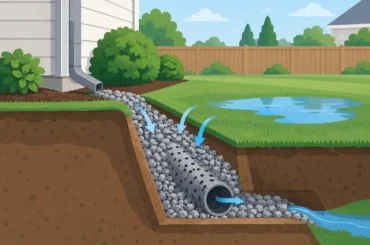
A good contractor will explain what can be corrected through grading and what may require drainage work. Depending on the site, the right solution could involve regrading, a catch basin, trench drainage, extending downspouts, or directing water toward a suitable outlet. The goal is simple: keep water moving where it belongs and protect the investment below and above ground.
Choosing the Right Finish for Your Property
A standard broom finish is a popular choice for concrete driveways because it provides traction and a clean, practical appearance. It works well with many home styles and is easier to maintain than more decorative surfaces. Edging can give the driveway a sharper, more finished look, while a wider layout or curved entrance can improve access and curb appeal.
Homeowners who want more visual detail may consider stamped concrete, colored concrete, decorative borders, or a combination of concrete and pavers. These options can make an entrance stand out, but they also involve different maintenance needs and costs. A decorative surface may be worth it for a front entry or highly visible driveway, while a straightforward broom-finished slab can be the smarter choice for a large, hard-working parking area.
The best choice depends on the home, budget, traffic, and how much maintenance the owner wants to take on. Honest recommendations should match the property rather than pushing a finish that does not fit the job.
Concrete Driveway Installation in New Jersey: Timing and Curing
Concrete work is weather-sensitive. Extremely cold temperatures, excessive heat, steady rain, and frozen ground can affect scheduling and the quality of the finished slab. Experienced crews monitor conditions and plan pours around the weather whenever possible.
Once concrete is placed, it needs time to cure. The surface may look firm quickly, but curing continues over time as the concrete gains strength. Foot traffic is usually permitted before vehicle traffic, but the exact waiting period depends on weather, mix design, thickness, and site conditions. Driving on new concrete too early can leave marks, cause damage, or put unnecessary stress on a slab that has not reached its intended strength.
Homeowners should also understand that concrete is not perfectly uniform in color during the early curing period. Shade variation, moisture, and normal curing can affect its appearance at first. Small hairline cracks may also occur in concrete over time, even with proper installation. The goal is not to promise a surface that can never crack. The goal is to build a stable driveway with proper joints, drainage, and support so it performs well for the long term.
When Replacement Makes More Sense Than Repair
Some concrete driveways can be repaired, especially when the damage is limited to a small area or a surface issue. Cracks can sometimes be sealed, and localized sections may be removed and replaced. But widespread cracking, major settling, repeated puddling, crumbling edges, or slabs that have shifted out of level usually point to a deeper problem below the surface.
Patching those conditions may improve appearance temporarily, but it will not fix poor base conditions or drainage. Full replacement allows the contractor to correct the grade, rebuild the base, and install a driveway designed for current needs. If the household now has larger vehicles, needs more parking space, or wants a safer entrance, replacement can also be an opportunity to improve the layout.
Questions Worth Asking Before You Hire
A clear estimate should explain the scope of work, including removal, excavation, base preparation, concrete thickness, reinforcement, joint cutting or placement, finish, and cleanup. If drainage is a concern, ask how water will be handled before the work begins.
It also helps to ask who will manage the job, how access to the garage will be affected, and what the expected schedule looks like. Owner-operated service can make a real difference here. When the people responsible for the work are directly involved, questions get answered faster and details are less likely to be lost between a sales office and the crew.
Price matters, but the lowest quote is not always the best value. A driveway is a structural surface that handles thousands of pounds, changing weather, and daily traffic. Compare what each contractor is actually including, especially the work below the concrete where long-term performance is decided.
Bentley Paving & Masonry approaches driveway work with that practical focus: quality materials, careful preparation, dependable scheduling, and clear communication from start to finish. A new concrete driveway should make coming home easier, improve the appearance of the property, and give you confidence when the next hard rain or winter freeze arrives.