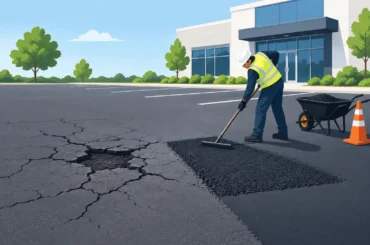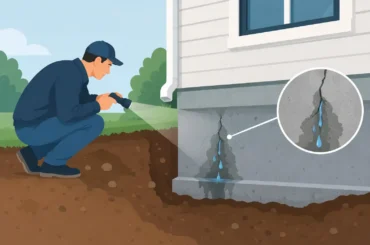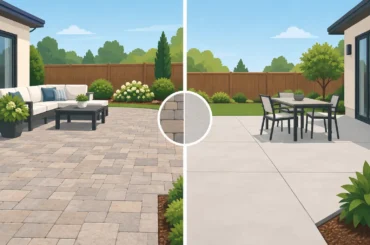
A driveway or parking lot rarely fails all at once. It usually starts at the edge: a thin crack, a crumbling strip near the grass, or a broken section where tires leave the pavement. Knowing how to repair asphalt edges early can prevent a small repair from becoming a larger paving project, especially in New Jersey where rain, snow, freeze-thaw cycles, and heavy vehicle use put pavement under real stress.
The key is not simply filling the broken area with blacktop. A lasting repair starts by finding out why the edge failed. Water, weak base material, poor drainage, and lack of support along the pavement border can all cause new asphalt to break apart if the underlying issue is left in place.
Why asphalt edges break down
Asphalt is strongest when it is supported from below and confined at the sides. At the center of a driveway, the surrounding pavement helps distribute vehicle weight. At the edge, there is less support. When a car tire repeatedly rolls onto an unsupported edge, the asphalt can crack, bend, and crumble.
Water makes the problem worse. Rain can enter small cracks and work its way into the stone base beneath the asphalt. Once the base becomes soft or washes away, the surface above it loses support. In winter, trapped water freezes and expands, opening cracks wider. By spring, an edge that looked like a minor flaw can become a pothole or a long section of broken pavement.
Poor drainage is often the real cause. If downspouts discharge along the driveway, if the grade sends water toward the pavement edge, or if a parking lot holds standing water, repairing the surface alone may only be a short-term answer.
How to repair asphalt edges the right way
The right repair depends on the size of the damaged area and the condition of the base. A narrow surface crack may only need sealing. An edge that is crumbling, sinking, or separating from the driveway needs a more complete repair.
Start by checking the damage
Walk the full perimeter of the driveway or lot rather than focusing only on the worst spot. Look for cracks that run parallel to the edge, loose chunks of asphalt, soft areas underfoot, and depressions where water collects. Check whether vehicles are regularly driving off the pavement onto soil, gravel, or grass.
A few signs point to a deeper problem:
- The edge has dropped lower than the rest of the driveway.
- Water puddles beside or underneath the damaged section.
- Asphalt breaks apart again after being patched.
- The base material is muddy, loose, or visibly washed out.
- Cracks extend inward from the edge toward the center of the pavement.
When these conditions are present, a surface patch is unlikely to last. The damaged asphalt and unstable base need to be removed before new material is installed.
Cut back to solid asphalt
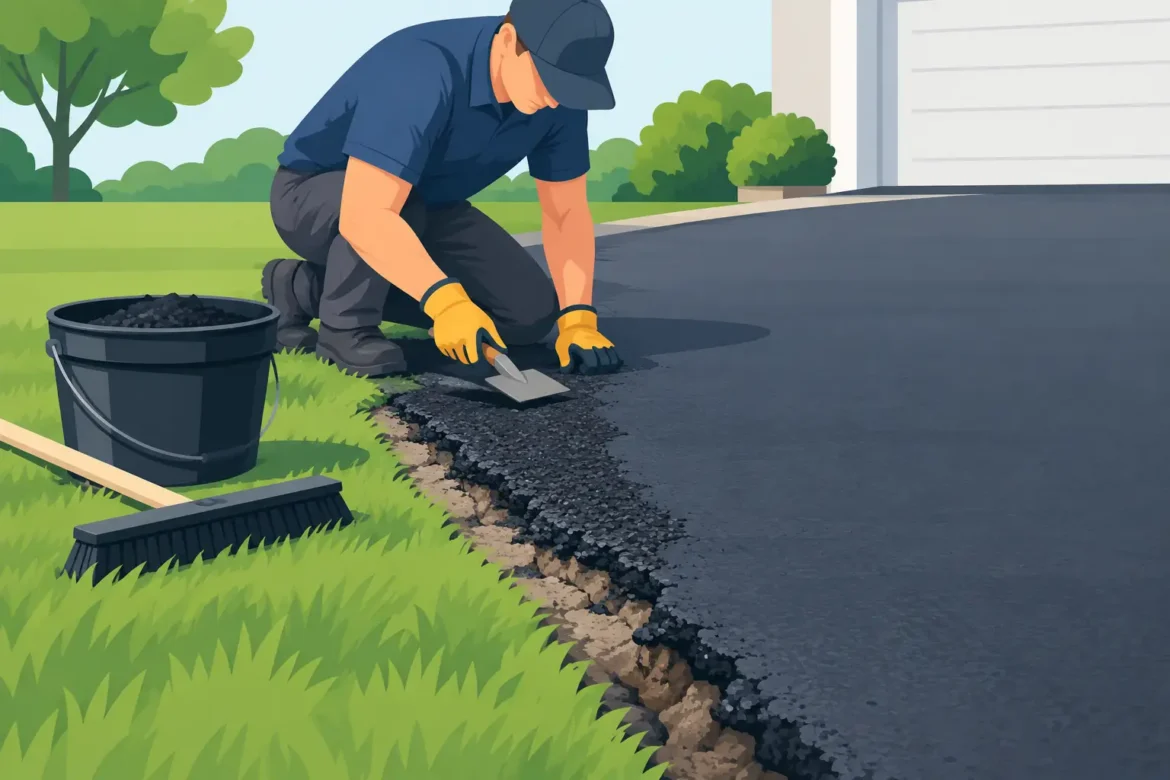
For a proper edge repair, the broken area should be saw-cut or neatly removed back to firm, stable pavement. Jagged, loose edges do not give new asphalt a dependable surface to bond against. Cutting a clean line also creates a more professional-looking repair once the work is complete.
The repair area should extend beyond every section of weak asphalt. Leaving even a small amount of crumbling material at the edge can allow the damage to continue underneath the new patch. This is one reason quick repairs sometimes fail within a season.
Repair and compact the base
After the failed asphalt is removed, inspect the stone base beneath it. If the base is dry, firm, and properly compacted, it may only need minor leveling. If it is soft, wet, thin, or washed out, it should be excavated and rebuilt with the correct aggregate material.
Fresh base stone is installed in layers and compacted thoroughly. Compaction matters as much as the asphalt itself. A new patch installed over loose stone can settle under vehicle weight, creating another low spot that holds water.
If water is entering the area, address that before paving. The solution may involve adjusting the grade, extending downspouts, installing drainage, or creating a stronger shoulder beside the pavement. Each property is different, but asphalt needs a stable, well-drained foundation to perform as it should.
Install hot asphalt, not just loose patch material
For a permanent repair, hot-mix asphalt is generally the better choice. It is placed at the appropriate depth, raked to match the surrounding surface, and compacted while hot to create a dense, durable patch. The new section should transition smoothly into the existing driveway or parking lot without creating a bump, lip, or low area.
Cold patch material has its place for temporary repairs, particularly when weather prevents hot asphalt work or when a property needs a short-term safety fix. It is not usually the best long-term answer for a failing driveway edge. It can loosen under traffic, especially where the base is damaged or water remains present.
A quality repair also includes properly sealing the joint where new asphalt meets old asphalt. This helps reduce water infiltration at one of the most vulnerable points in the repair.
Give the repaired edge support
An asphalt edge should not be left hanging over soft soil. A properly built gravel shoulder, compacted stone border, concrete curb, or masonry edge can help support the pavement and reduce cracking caused by vehicles rolling off the surface.
For residential driveways, a compacted stone shoulder is often a practical option. It gives tires a firm place to land if someone pulls slightly off the driveway and helps direct water away from the pavement. For commercial lots, curbing and well-designed drainage may be more appropriate because of heavier traffic and larger water volumes.
The right choice depends on how the property is used. A family driveway with occasional passenger vehicles has different needs than an apartment complex, retail lot, or service entrance that sees delivery trucks. The repair should match the load the pavement carries.
When sealcoating can help, and when it cannot
Sealcoating is useful for protecting sound asphalt from sun, moisture, oil, and gradual surface wear. It can improve the appearance of a driveway or parking lot and extend the service life of pavement that is structurally in good condition.
But sealcoating will not repair a broken edge, fill a pothole, or stabilize a washed-out base. Applying sealer over crumbling asphalt may make the problem look better for a short time, but it does not restore strength. Repairs should be completed first, then the surface can be sealcoated when conditions are right.
For many New Jersey properties, regular crack sealing, drainage maintenance, and sealcoating on a sensible schedule are far less costly than waiting until edge damage spreads across the whole driveway.
Can you repair asphalt edges yourself?
Homeowners can sometimes handle very small, shallow edge repairs with cold patch and hand tools. The work should be done in dry weather, with all loose debris removed, and the material must be compacted firmly. Even then, it is best viewed as a temporary measure rather than a full repair.
A professional repair is usually worth considering when the damage is more than a few feet long, when the edge is sinking, or when there is any sign of drainage or base failure. These jobs require the right equipment for removal, grading, compaction, and asphalt installation. More importantly, an experienced paving contractor can determine whether the visible damage is the real problem or only a symptom of water and foundation issues below.
Protect the rest of the pavement
Once the edge is repaired, keep heavy vehicles from using the very outside portion of the driveway whenever possible. Avoid parking trailers, dumpsters, or work trucks close to unsupported pavement. Keep gutters and downspouts from emptying directly beside the asphalt, and remove soil, mulch, or overgrown grass that traps moisture along the edge.
It also helps to inspect the pavement after winter and after major storms. Fresh cracks, standing water, and loose asphalt are easier and more affordable to correct when they are caught early.
A clean, properly supported asphalt edge does more than improve curb appeal. It protects the structure of the entire paved surface. For property owners who want the repair handled with clear communication and quality materials, Bentley Paving & Masonry can evaluate the cause of the damage and recommend a practical fix that fits the property. Taking care of a failing edge now can keep the rest of the driveway or lot working safely for years to come.