A wet basement usually starts outside. Water may be running toward the foundation, collecting beside the house, or soaking into soil that stays saturated long after a storm. That is why basement waterproofing versus drainage is not always an either-or decision. One system manages the water before it becomes a problem. The other protects the foundation when water reaches it.
For New Jersey homeowners, the right answer depends on where the water is coming from, how it moves across the property, and what signs are showing up indoors. A dependable repair starts with finding the cause, not simply covering up a damp wall.
What Drainage Does for Your Property
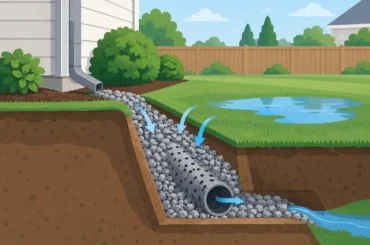
Drainage is designed to control water on the exterior of your property. Its job is to collect runoff and direct it away from the house, driveway, walkways, patio, retaining wall, or parking area. When grading and drainage are working properly, rainwater has a clear path to follow instead of pooling near the foundation.
Common drainage work may include correcting the slope of the yard, extending downspouts, installing catch basins or channel drains, adding underground drain lines, and building a French drain where conditions call for it. The goal is simple: keep water from sitting where it can cause damage.
This matters because water pressure builds in saturated soil. After a hard rain, that pressure pushes against foundation walls and looks for a way inside through cracks, joints, utility penetrations, or porous masonry. It can also wash out soil, create puddles on asphalt, loosen pavers, and shorten the life of exterior improvements.
Drainage is often the first place to look when the basement gets wet only after heavy rain, when downspouts discharge near the house, or when the ground slopes toward the foundation. A homeowner may assume the basement needs a major waterproofing job when a clear grading issue is sending every roof runoff event directly against the home.
What Basement Waterproofing Does
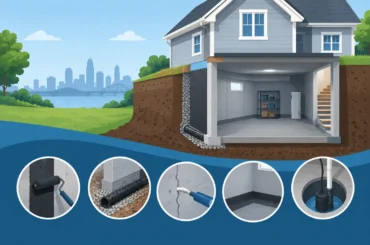
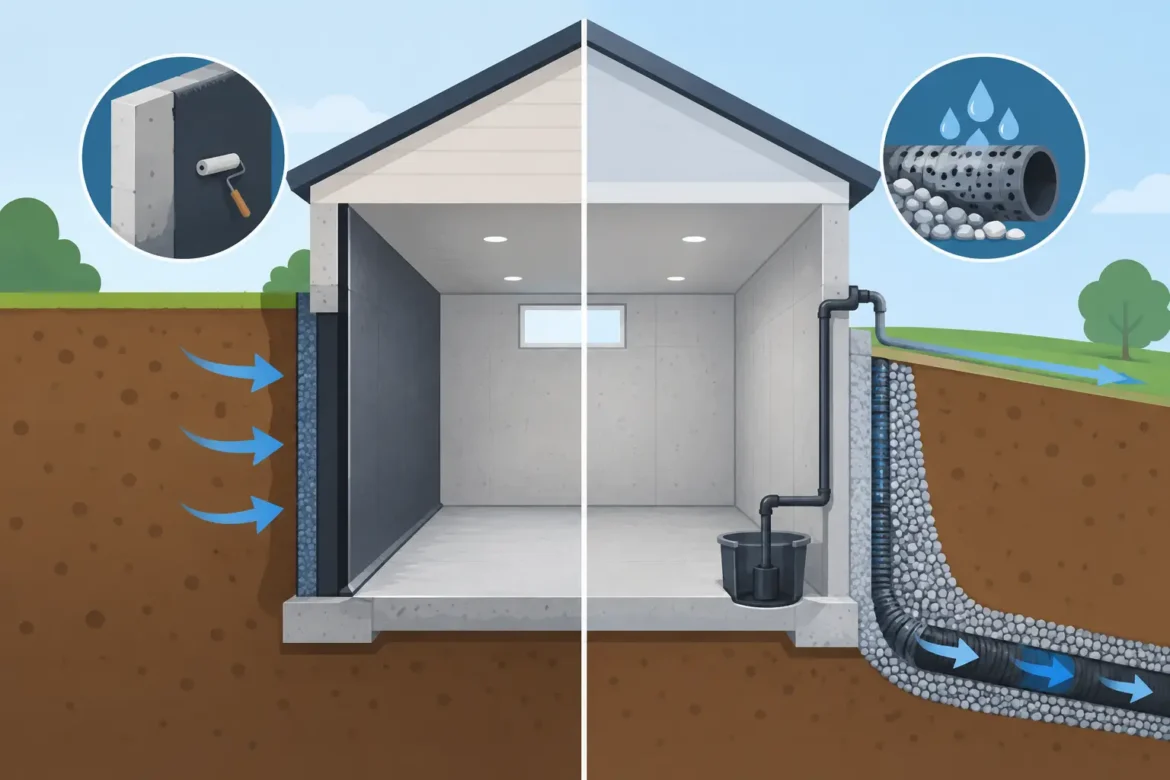
Basement waterproofing focuses on protecting the foundation and the space below grade. Depending on the condition of the home, it can involve exterior waterproof coatings or membranes, foundation crack repair, drainage board, footing drains, interior perimeter drainage, a sump pump system, or a combination of these solutions.
Exterior waterproofing is usually the most direct way to protect a foundation wall because it addresses water from the outside. It may require excavation around the foundation to expose the wall, repair defects, apply protection, and improve drainage at the footing. This is substantial work, but it can be the right investment when water is consistently reaching the foundation or when walls show signs of ongoing moisture damage.
Interior systems are sometimes the practical choice when exterior excavation is limited by access, landscaping, patios, additions, or neighboring structures. An interior drain and sump system can collect water that reaches the foundation and move it out safely. It manages the water effectively, although it does not stop the exterior soil from becoming saturated.
Waterproofing is generally the stronger recommendation when there are visible foundation cracks, repeated seepage through the wall-floor joint, white mineral deposits on masonry, peeling finishes, musty odors, mold concerns, or water entering even after obvious surface runoff issues have been corrected.
Basement Waterproofing Versus Drainage: The Real Difference
The simplest way to understand the difference is this: drainage controls where water goes, while waterproofing protects the structure from the water that gets close.
A drainage correction may solve the whole problem when water is clearly flowing toward the house from a roof, driveway, patio, or poorly graded lawn. If the basement has stayed dry for years and only started leaking after a gutter failure, landscape change, or paving project that altered runoff, exterior water management should be checked first.
Waterproofing becomes more necessary when the foundation itself is vulnerable. Older homes may have worn coatings, deteriorated mortar, cracks, or footing drains that no longer function. In those situations, moving surface water away is still helpful, but it may not be enough to stop moisture from entering below grade.
The best projects often use both. For example, a property may need regrading and downspout drainage to reduce the amount of water reaching the house, along with foundation waterproofing to protect a wall that has already begun to leak. Treating only one side of that problem can leave the other side waiting for the next heavy storm.
Signs You May Need Drainage Work First
Property owners should pay attention to what happens outside during and after rainfall. Surface clues are often easier to spot than the damage they cause indoors.
Drainage may be the priority when you see standing water next to the foundation, downspouts emptying at the base of the house, soil that slopes toward the building, puddles across a driveway or walkway, or runoff from a patio directed at the home. Water staining on the lower exterior wall can also indicate that splashback and poor runoff are keeping the area wet.
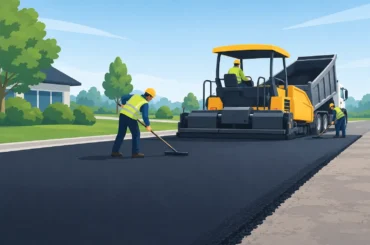
Drainage problems should not be ignored because they affect more than the basement. Water that repeatedly crosses a driveway can weaken the base beneath asphalt. Water caught behind a retaining wall can increase pressure and lead to movement or cracking. Ice that forms in low areas creates a slip hazard for family members, visitors, and customers.
A properly planned drainage system has to account for the whole property. Sending water away from the house is only useful if it has a safe place to discharge without flooding a driveway, damaging a neighbor’s property, or creating another low spot elsewhere in the yard.
Signs Waterproofing Is Likely Needed
Some warning signs point beyond a simple surface drainage adjustment. If water appears along the basement floor perimeter, comes through a crack, or enters at the wall-floor joint, the foundation needs a closer look. The same is true if the basement smells damp even when there is no visible standing water.
Efflorescence, the chalky white residue that can appear on masonry, is another sign that moisture is moving through the wall. So are flaking paint, crumbling mortar, warped finished materials, and rust on metal items stored near exterior walls. These conditions do not automatically mean a full exterior excavation is required, but they do mean the problem should be diagnosed before it gets worse.
If a basement is finished or used for storage, water protection becomes more urgent. Replacing drywall, flooring, furniture, or stored belongings after repeated leaks costs far more than correcting a known water issue early.
Why One-Size-Fits-All Repairs Fail
Quick fixes can be tempting. A coat of paint on an interior wall may hide stains for a while, but it does not relieve outside water pressure. Filling a visible crack may help in some cases, but it will not solve runoff that continues to saturate the soil around the foundation. Likewise, installing a drain line without correcting a severe foundation defect may only reduce part of the problem.
The right repair depends on the water source, the construction of the home, the grade of the property, and the condition of the existing foundation. New Jersey properties also deal with intense summer storms, freeze-thaw cycles, compacted soil, and mature landscaping that can make drainage more complicated than it first appears.
That is why an on-site assessment matters. A contractor should look at roof runoff, yard slope, paved surfaces, low areas, existing drains, foundation conditions, and where water is likely traveling during a storm. The work should fit the property, not a prepackaged sales pitch.
A Practical Way to Choose the Right Solution
Start by observing the property during rainfall if it is safe to do so. Notice where water leaves the roof, where it collects, and whether it moves toward the house. Check whether gutters are clear and whether downspouts carry water far enough away from the foundation.
Next, consider the basement symptoms. Water that appears only after a large storm may point to an exterior runoff issue. Water that returns regularly, seeps through masonry, or occurs along a wall-floor joint may call for waterproofing along with improved drainage.
Bentley Paving & Masonry approaches these projects with the same practical mindset used for driveways, patios, and hardscape work: water needs a planned path. Correcting the grade, drains, paved surfaces, and foundation protection together can prevent repeat damage and protect the investment you have already made in your property.
A dry basement should not depend on hoping the next storm takes a different path. When water is managed before it reaches the foundation and the foundation is protected where needed, your home is in a far better position for every season ahead.